
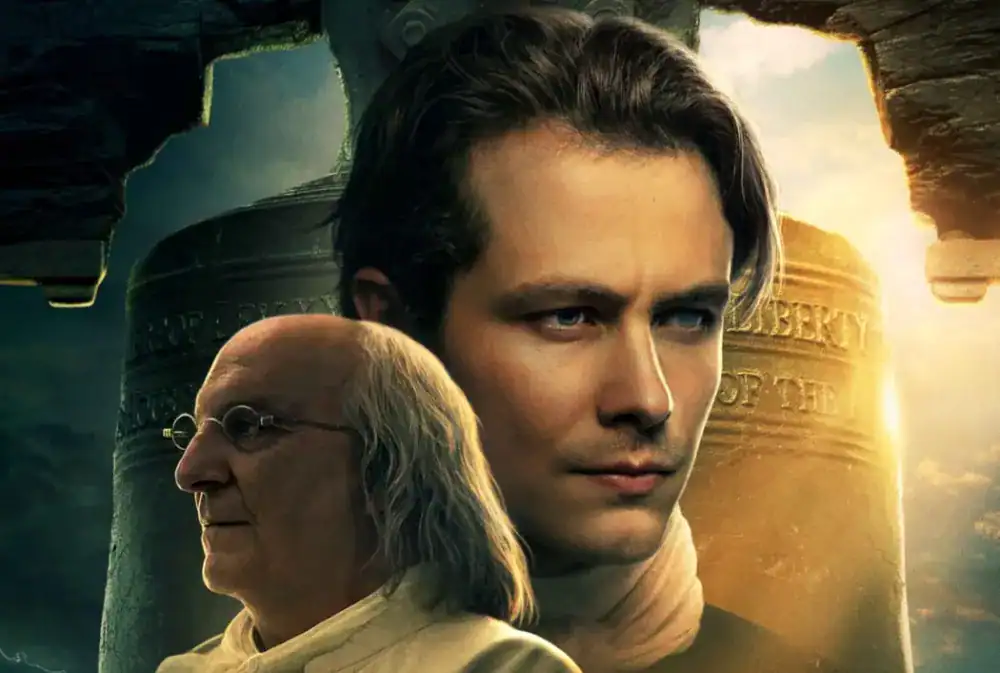

I must admit, until this week, I had never heard of George Whitefield. Or at least I didn’t remember him.
That alone is worth a pause.
As we continue along with America’s 250th anniversary – a period saturated with names like George Washington, Thomas Jefferson, and Benjamin Franklin – how is it possible that a man who helped shape the spiritual character of the colonies remains largely unknown?
That question followed me out of the theater after watching “A Great Awakening” on an early Palm Sunday showing.

I went despite a month of nagging, at times excruciating, sciatic back and leg pain. Sitting still for two hours was not a small decision. But the discomfort had an unexpected effect: it sharpened the experience. It stripped away distraction. What came through most clearly was not just a story – but a voice.
Whitefield’s voice.
A Preacher Before a Revolution
The film traces the unlikely friendship between Whitefield and Franklin – two men very different in temperament but bound together in influence. Franklin, the rationalist, became fascinated with Whitefield’s ability to command massive crowds. He published his sermons and even measured how far his voice could carry in open air.
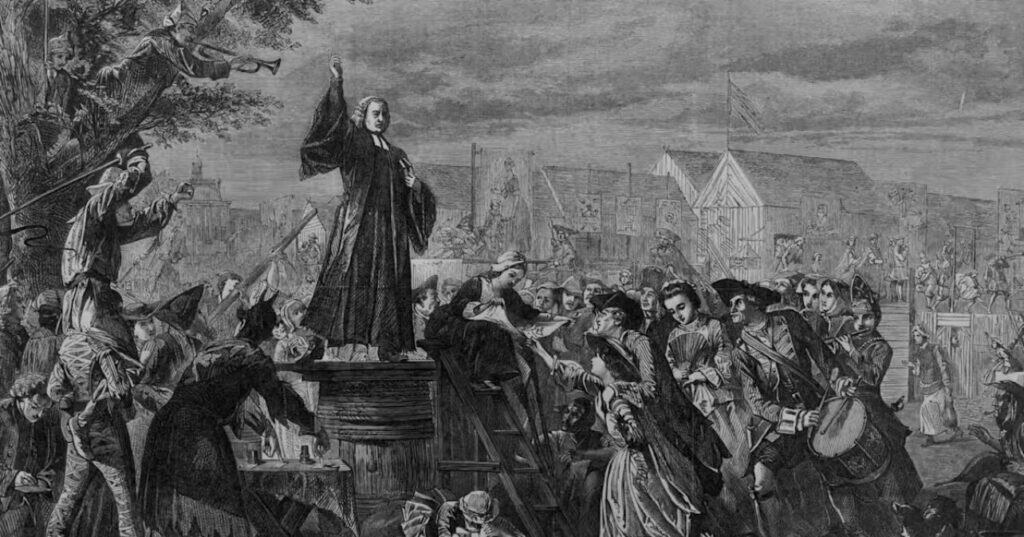
Whitefield preached thousands of times across the colonies to audiences that sometimes reached into the tens of thousands. This was unheard of in the 18th century. He stepped outside church walls, crossed denominational lines, and delivered a message that was direct, urgent, and deeply personal.
But more importantly, he prepared something.
Freedom From – and Freedom Within
By the mid-18th century, the colonists were already developing a growing desire for freedom from Great Britain.
Freedom from distant rule.
Freedom from taxation without representation.
Freedom from imposed authority that did not understand their lives.
Those grievances are well known.
What Whitefield offered was different.
He preached that man is not only constrained by external forces – but bound internally. Bound by pride, greed, jealousy, and self-absorption. His message was clear: true freedom begins there.
Freedom from oneself.
From the tyranny of ego. From the quiet slavery of appetite and ambition. From the illusion that we are sufficient on our own.
Whitefield’s preaching was fiery. But it was grounded in hope. He called people to public faith and transformed lives. Not merely belief, but renewal.
And people responded.
Revival Before Revolution
The First Great Awakening is often described as a religious movement. It was that. But it was also a cultural shift.
Whitefield preached to everyone: wealthy and poor, educated and uneducated, enslaved and free. In doing so, he reinforced a radical idea for the time – each individual stood equal before God.
That message carried consequences.
It helped unify the colonies across regional and denominational lines. It encouraged skepticism of rigid authority. It emphasized individual worth and accountability.
Even Benjamin Franklin – no evangelical zealot – recognized its power and helped amplify it.
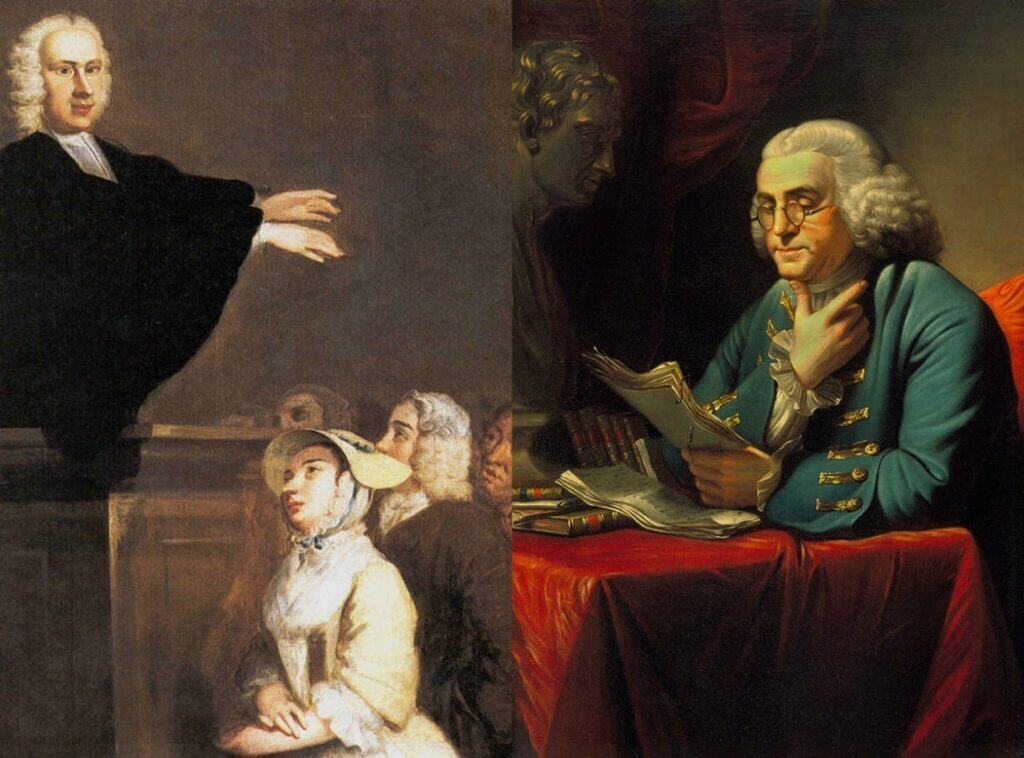
This is where the connection to America 250 becomes unmistakable.
When the Founders later wrote that men are “endowed by their Creator with certain unalienable rights,” they were not inventing that idea from thin air. They were drawing from a culture already awakened to the belief that human dignity and the hunger for freedom comes not from government, but from God.
A Freedom Hardwired Into Us
Whitefield did not write the Declaration of Independence.
But he helped prepare the people who would.
He cultivated a population that understood freedom not only as a political condition, but as a spiritual reality. That the desire for liberty is not merely reactionary, but innate. Hardwired. Placed within us by our Creator.
And that distinction matters.
A people seeking only freedom from external control will remain restless.
But a people who begin to experience freedom from within – from the bondage of self – are prepared for something more demanding: self-government, responsibility, and ordered liberty.
A Forgotten Founder
Perhaps George Whitefield belongs in a broader category than we typically allow.
Not a political founder.
A spiritual one.
A man who helped set the table. Long before 1776 – for a people capable of understanding what freedom truly meant.
The Question for Our Time
Walking out of the theater (carefully, still feeling the strain in my back) I found myself thinking less about Whitefield the man and more about his message.
That transformation begins within.
That liberty must be formed in the soul before it can be sustained in a republic.
As we enter 250 years of American independence, that may be the more pressing question:
Not just whether we remain politically free, but whether we are, in any meaningful sense, free at all. And whether in our own time, we are due not just for reflection…but for another awakening.
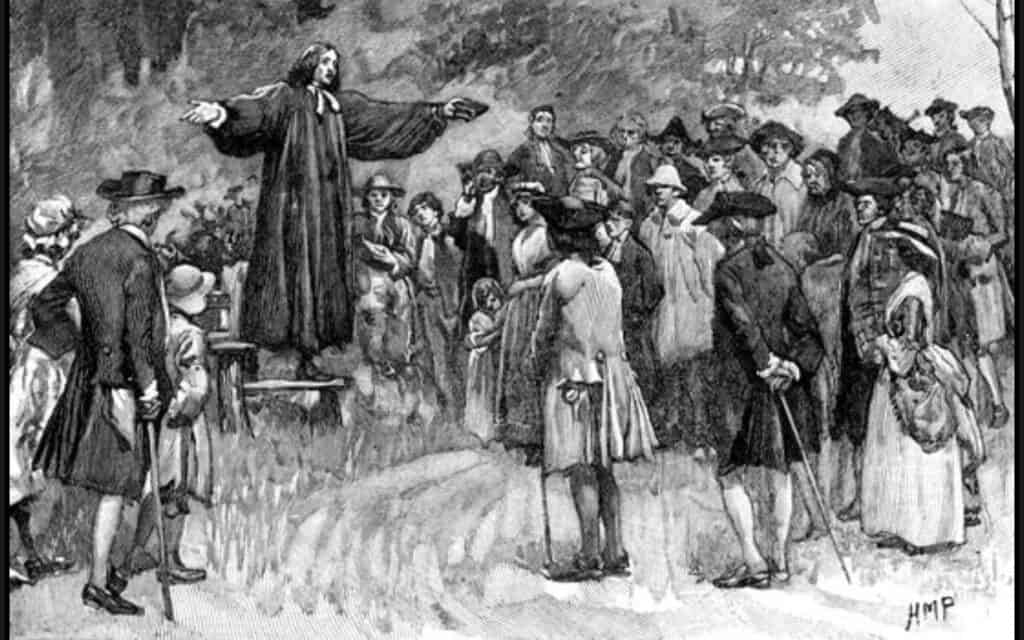
“The Great Awakening” opened in theaters on Easter weekend.