

North Carolina’s legislature is about to go back into session in April. When the doors on Jones Street open, state legislators face big issues like the budget, tax rates and funding for the state’s Medicaid program.
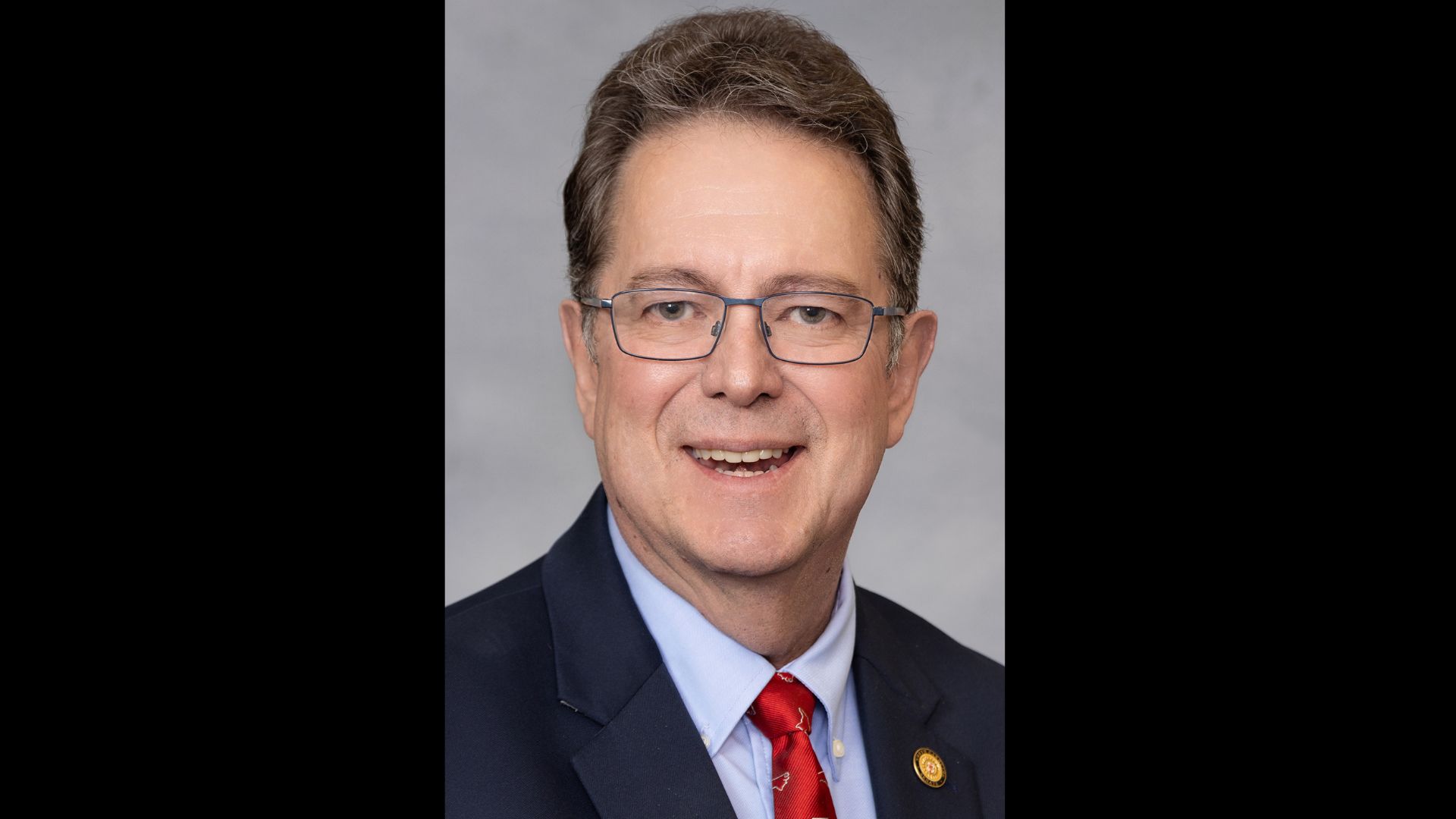
In advance of the session, here are three takeaways from N.C. Sen. Kevin Corbin (R-Macon), who represents the 50th district in Cherokee, Clay, Macon, Jackson, Swain, Transylvania and Haywood counties.
On state budget
North Carolina’s fiscal year started more than eight months ago, but it is still operating on a continued budget – making it the only state in the country without a fully-enacted state budget. House and Senate Republicans have been in a standoff over tax rates.
Sen. Corbin disagreed with the characterization of the state not having a budget.

“We’ve had a budget. The budget is a continued resolution, and we added money to that to the tune of about $800 million, so we actually increased the budget by about 2.1% from what it was last year, and that’s to the year we’re in now,” Sen. Corbin said.
“Whether we’ll add to that or whether we’ll actually come out with a new budget, I don’t know. It’s a little early to see. There’s a lot of people involved in that, a lot of moving parts, but I do think we’ll fund Medicaid,” he said.
He also said, as the chair of the Senate Education Committee, he hopes to get “raises through for our teachers and other state employees.”
On Helene recovery
Along with Asheville Mayor Esther Manheimer, Corbin co-chairs the Western North Carolina Recovery Committee. He said he expects to see more funding on the table at the legislature. Sen. Ralph Hise, a fellow Republican in Mitchell County, is also on the committee.

“We’re both beginning to work on that, and when we get back in April, we’ll be working on a new funding package,” Corbin said. He explained that about $200 million was set aside during the last session for Helene recovery.
He said that debris removal, as well as private road and bridge repair funding, are at the top of his list of priorities.
“The damaged area was as big as the state of Massachusetts. So getting that cleaned up. It’s been a long, long process, and it’s going to be a little while longer,” Corbin said.
The state only has funding for about 10% of the private roads and bridges that need to be repaired.
“There were a lot of private roads and bridges washed out that aren’t the state’s responsibility, but nevertheless, those need to be replaced,” Corbin said. “A lot of those are reimbursement, for folks that have already done the work. So that’s definitely a need for money to continue to help homeowners, business owners – and all that’s going to be on the table.”
He said he expects to have more recovery funding announced by the end of April.
On Medicaid
Corbin has been a longtime proponent of Medicaid expansion in North Carolina.
North Carolina expanded Medicaid in 2023 after more than a decade as one of the few states in the country to decline the program coverage as part of the Affordable Care Act passage.
“It was very needed, especially in Western North Carolina, to cover people that just did not have insurance, where the coverage gap, as we called it, and we now have those people covered,” Corbin said. “Actually, thousands of people in Western North Carolina are now covered with health insurance that weren’t before. Obviously, I’m going to do everything I can to make sure those programs are fully funded.”
In January, the “Big Beautiful Bill” cut $1 trillion from Medicaid across the country over the next 10 years. This means that the state will need to fill in a $319 million funding gap for the 2025-2026 fiscal year.
The Big Beautiful Bill also created stricter eligibility requirements, including work requirements, and narrowed eligibility for immigrant populations.
In July, the state legislature passed a mini-budget that did not include an additional $319 million shortfall for Medicaid. Ultimately, the provider reimbursement rate cuts were reversed by the courts and Gov. Josh Stein in December, NC Health News reported.
Corbin said he doesn’t sense any move to get rid of Medicaid expansion. He is on the health committee and said there is a general consensus to pass keep coverage.
“We just did [expansion] two years ago. So, no, I don’t think so. We’re just moving into the budget process, and I think we’ll wind up funding Medicaid,” Corbin said.
He said that the first part of Medicaid that needs to be funded is the Medicaid rebase, which is funding the existing block of Medicaid users “to make sure the providers get paid and folks get the care they need and medications.”
“Medicaid is fully funded through around the 1st of June. So we will need to put that into the funding mix when we get down there,” Corbin said.
However, there is one piece of the Medicaid puzzle that could be out of the hands of legislators. When the expansion was approved, there was a “trigger clause” added. This clause states that if the federal government stops covering 90% of its cost, Medicaid expansion ends immediately.
Jonathan Kappler, the Department of Health and Human Services deputy secretary for external affairs and chief of staff, told The News & Observer that the work requirements could trigger this clause if the state has to use state dollars to cover the costs. Work requirements for Medicaid expansion recipients are scheduled to begin in early 2027.
Corbin is currently running for re-election. He faces Democrat Tom Downing of Cullowhee in Nov. 2026.
Corbin said that there has been $200 million set aside for Hurricane Helene recovery so far by the legislature This was updated form $200,000 .
This article first appeared on NCLocal and is republished here under a Creative Commons Attribution-NonCommercial 4.0 International License.