



With the county’s driest start in 132 years leading to a major drought, the question on many Maconian’s minds is no longer “When will it rain?” but “Will it be enough?” Yesterday, state drought management and weather experts offered good and bad news.
The good news: the National Weather Service forecasts two to three inches of total rainfall in the next six to ten days, along with a dip in temperatures.
The bad news: the drought’s impact will last at least 30 days, even under a best-case scenario said leaders of the state’s Drought Management Advisory Council (DMAC).
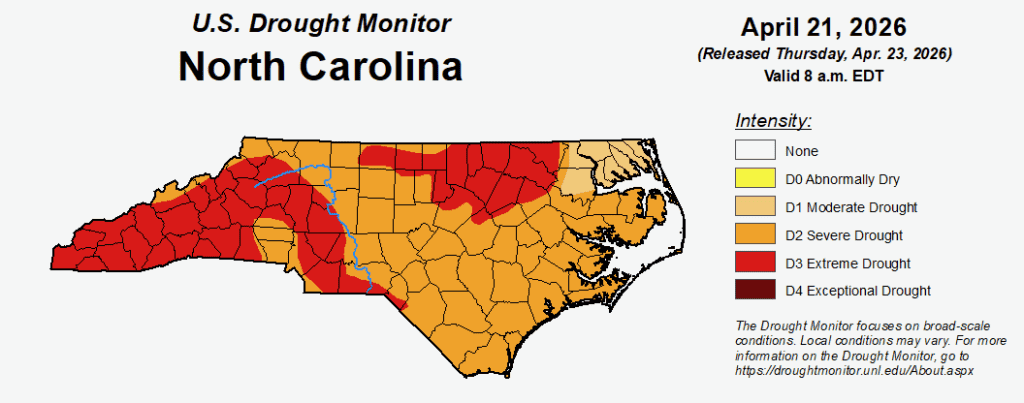
In what is now a declared natural disaster, North Carolina State University and state agencies led a call to detail what local governments and residents can expect.

“This has been a slow developing drought over the past six to eight months,” said Corey Davis, North Carolina assistant state climatologist. “Really, once we got to mid-August, the faucet turned off.”
A quiet 2025 hurricane season, the La Niña-induced dry air coming off the Pacific Ocean, and a summer-like weather pattern this spring all contributed to the worst drought the state has experienced since 2007. Macon County received 10.56 inches less precipitation than it normally would during the first quarter of 2026.
It is the fifth driest March on record and the driest year to date in 132 years of record keeping. Even with some limited rain in the forecast, April is on track to break drought records in western North Carolina.
Impacts on agriculture, outdoor activities
More than 80 percent of the county is categorized as being in “extreme drought”, the second-most severe category in the U.S. Drought Monitor’s classification system.

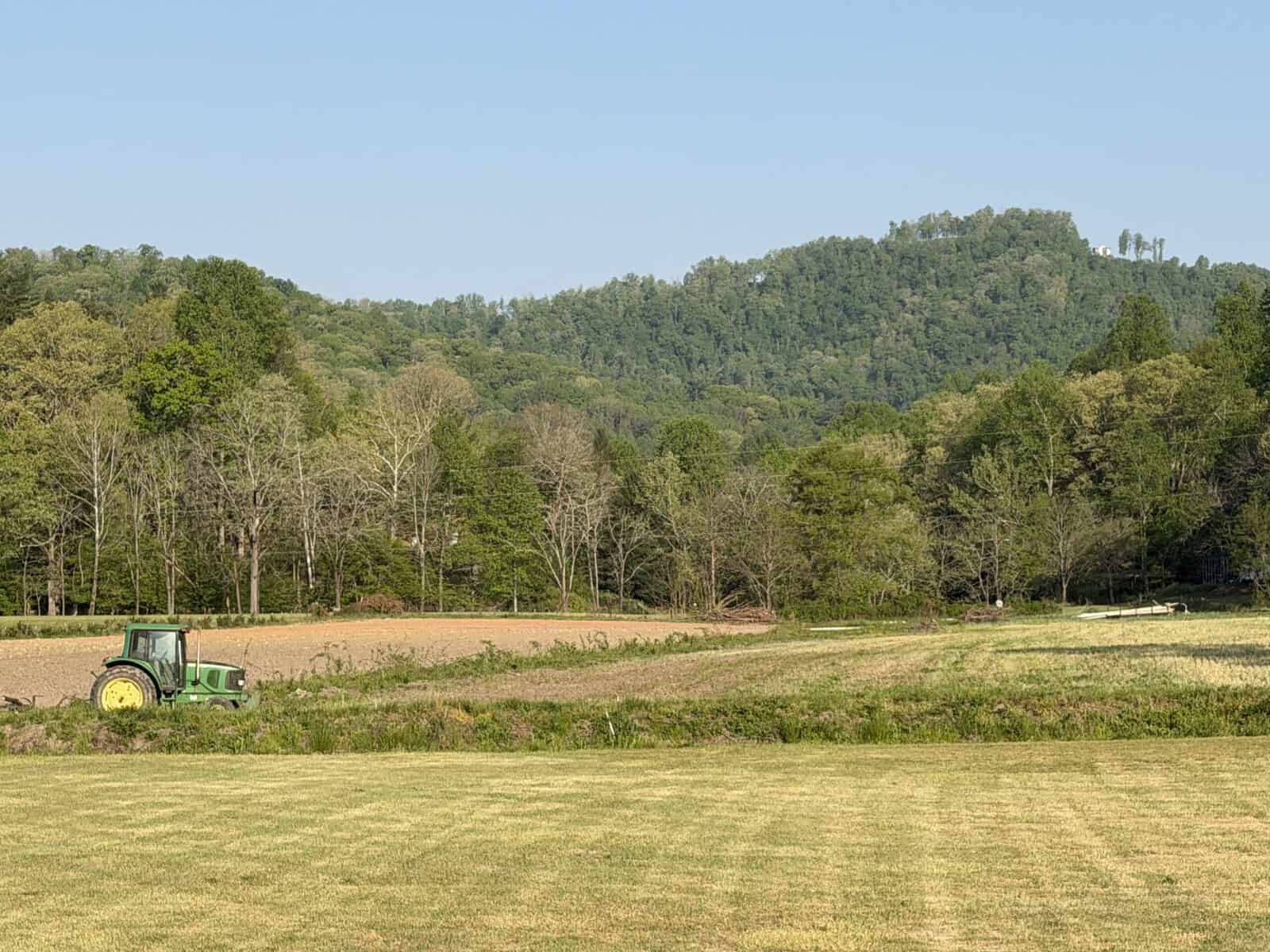
On Tuesday, the U.S. Department of Agriculture announced a natural disaster declaration for the county, which opened up potential support from the Farm Service Agency (FSA) to extend emergency credit to producers recovering from natural disasters. According to USDA tracking, an estimated 3,248 acres of hay and 26 acres of corn are potentially affected countywide.
Davis raised concern about crop planting choices for farmers. “Soil moisture is very, very low right now. Farmers are not going to see the yields that they expect if the dryness keeps up.”
Under state guidelines, the Town of Franklin began asking citizens to voluntarily restrict the amount of water being used effective April 22. A statewide burn ban issued in March remains in effect to reduce wildfires and help firefighters conserve resources and respond rapidly to outbreaks.
“Although a burn ban doesn’t prevent wildfires [entirely], it reduces the number of new ignitions,” explained Jamie Dunbar, a fire environment staff forester from the state forest service. “A quarter inch or half inch of rainfall will help momentarily.” But fallen trees from Hurricane Helene and dried forest debris remain a concern as fuel for new fires.
Dealing with drought closer to home
“Droughts and floods have been happening for a long time…in our region, the dry years are getting drier and the wet years are getting wetter,” observed Jason Love, a member of the citizen-led Water Quality Advisory Committee.
“One of the things that Macon County has in its favor is that 46 percent of the county is part of the Nantahala National Forest,” said Love. “This means to a large degree our headwater streams are buffered against most forms of pollution (but not all) and extreme hydrological events, such as drought and flooding.”
Love pointed to a study of how drought and water use affected Franklin’s water supply during a previous drought. “When Cartoogechaye Creek was at its lowest level, due to drought, was also when the most water was being consumed, primarily through irrigation, watering lawns, etc. The time when our rivers are most stressed from a drought can often coincide when the most water is being siphoned out for use.”
Helping local planters
Eric Gray, marketing coordinator of Winding Stair Gardens, said they haven’t experienced the effects. Part of its business model is choosing, “The right plants for the right climate zone,” and guiding customers on best practices to establish plantings.

He said that home gardeners can increase their chances of success by choosing native plants used to Appalachian conditions.
For instance, the nursery sells a wide variety of blueberry plants but often points customers to the Rabbiteye and N. Highbush varieties as they are best suited for the local climate and elevation.
During a tour of the nursery, Gray pointed out how Winding Stair used a combination of well water and groundwater from a small stream on its property to irrigate its stock, but is keeping a close eye on conditions.
Winding Stair recommended the following to help get plants established while observing voluntary restrictions:
- Water yards and gardens heavier once a week rather than lighter multiple times per week. This helps roots establish deeper in soil.
- Mulch plants with 2 – 3 inches of layer to protect against heat and trap moisture
- Water plants before 10 a.m. to avoid evaporation.