


Commissioners approved the county’s 2026-2027 budget earlier this month and avoided adding any new tax increases in the process.
Meanwhile, North Carolina’s General Assembly is focused on tax relief options, but is not expected to meet the June 30 deadline to pass a new state budget. Down to six days, the state will likely once again work under a continuing resolution for the next year.
Tough decisions but no county tax increase
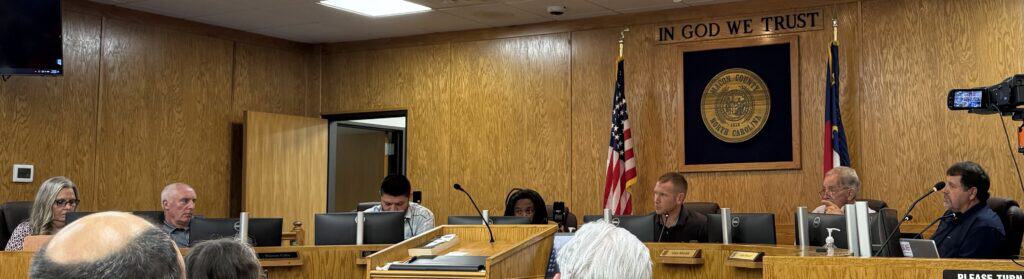
The Macon County Board of Commissioners kept to their promise to avoid tax increases for the coming fiscal year and held the local property tax rate at $0.27 per $100 of value, which has been one of the lowest in the state for the past few years.
County Manager Warren Cabe and Interim Finance Director Lindsay Leopard worked closely with county employees to prepare a budget that only covered the most essential activities. The approach garnered praise from many Commissioners before they unanimously approved the $69,984,066 budget.

Commissioner John Shearl stated, “This is a fantastic budget they have put together for this county.”
Macon County Schools
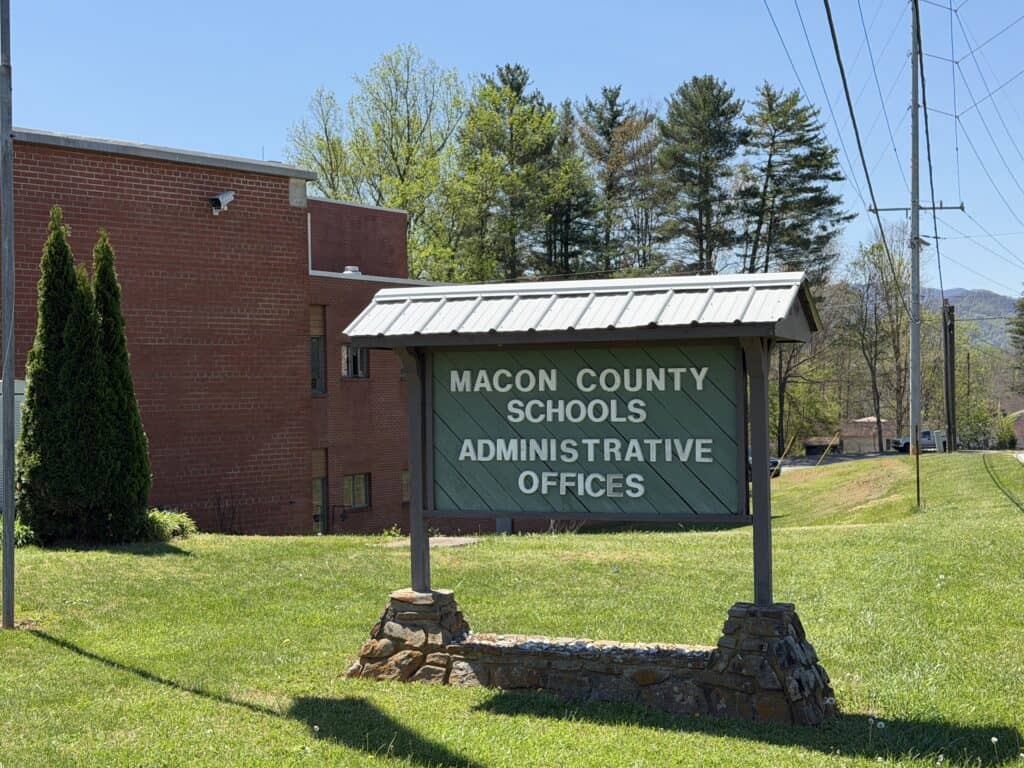
Through a series of sessions in May, commissioners worked out a number of funding items with county department representatives and the community on priorities. Education funding remained the most vexing issue in the negations.
During one work meeting, Leopard walked commissioners through the full financial picture for educational needs, explaining that the school system’s budget is funded 64% by the state, 20% locally, 5% federally, 6% provided by school nutrition programs, and 5% through other sources.
Chairman Josh Young “expressed genuine struggle with the budget situation,” noting the tension between deep community needs, such as teachers for exceptional children, mental health professionals, bus drivers, and the county’s stretched revenues. He said his hope rests on the quarter-cent sales tax referendum in November to close part of the gap.

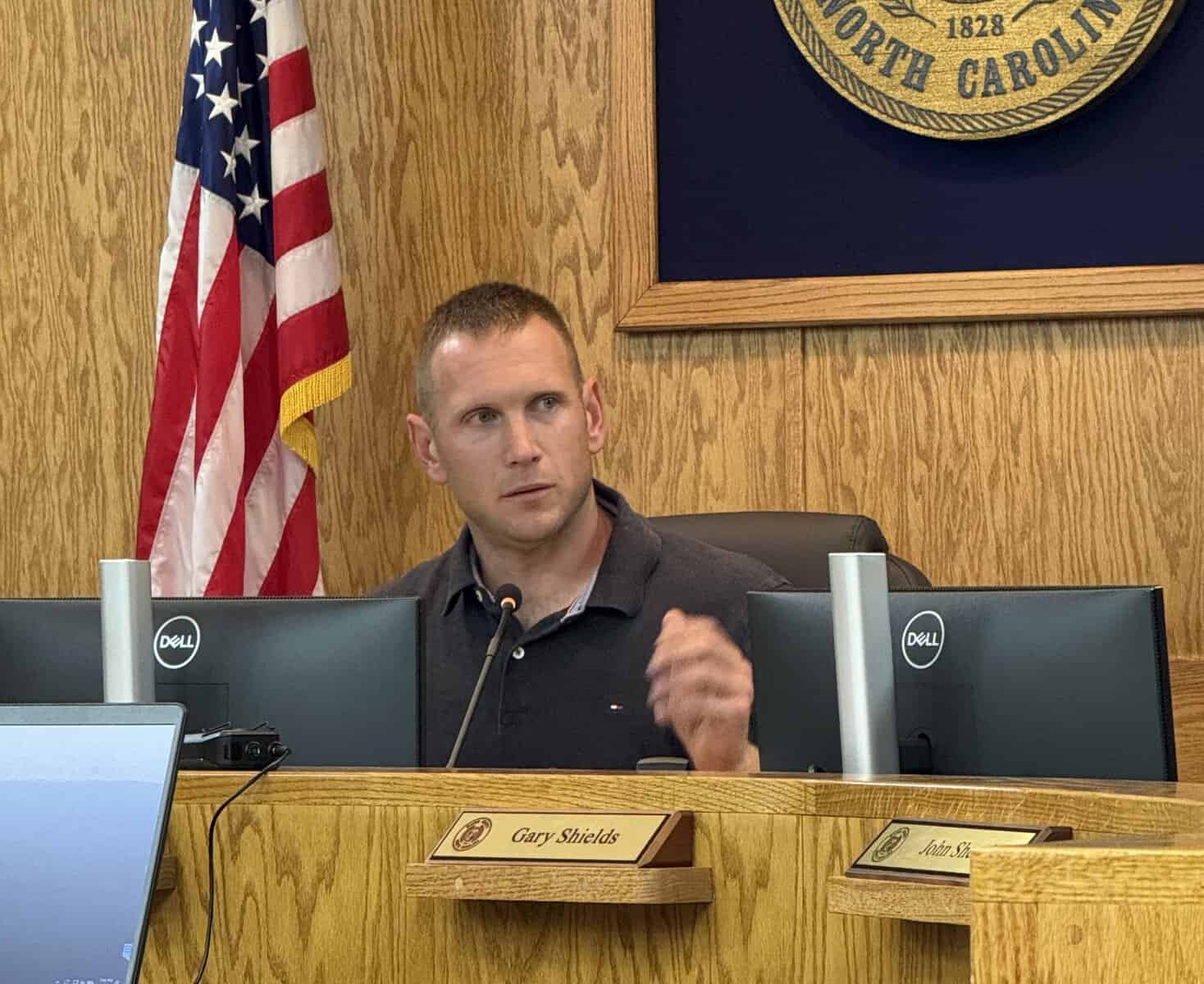
Commissioner Barry Breeden made a motion, seconded by Commissioner Gary Shields, to allocate $1,259,058 from the general fund balance, with 18% going to Macon County Schools operating expenses, and $116,156 going to contingency. In the end, Commissioners budgeted $11,824,471 for operating expenses for MCS.
Fire districts mixed results
Only two Fire Tax Districts, Cullasja and Highlands, requested changes to their tax rates in the coming year.
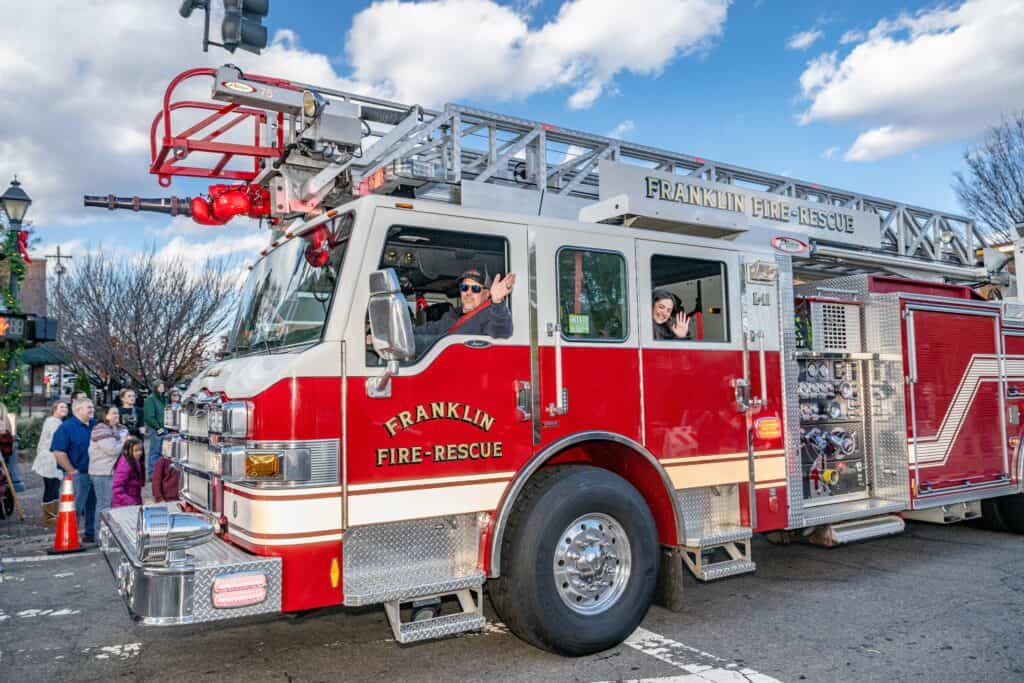
Cullasaja fell short on being able to convince Commissioners to support the requested change due to questions over accounting procedures. Glenda Cook, head of the Cullasaja Gorge Volunteer Fire Department, acknowledged during the work meetings the stuggles of the district. Cook pledged “continued transparency and accountability so residents can see how funds are used.”
Commissioners left open room for further discussion during the next year once Cullasaja presented results of a forensic audit.
Highlands Fire and Rescue fared better on its request for a tax increase.
After reviewing the requests on what an increase would pay for including higher call volume and staffing requirements, Breeden made a motion, seconded by Commissioner Danny Antoine, to adjust the fire tax rate for the Town of Highlands to $2.94 per $100 of assessed value as a compromise.
The increase of $1.02, about half of the original request, will align more closely with the comparative rate in Cashiers.
Macon property tax reappraisals
The General Assembly has kept a laser-like focus on tax relief during this year’s short term with working committees examining larger tax restructuring for the state. The continued push for tax relief prompted legislators to add some new features into fiscal planning for the next year.
On June 19, Governor Josh Stein signed the “Property Tax Reappraisal Moratorium” into law, which is meant stop reappraisals the possibility of property tax increases in some counties.
While twelve counties are immediately impacted, Macon County will move forward with its reappraisal efforts. Tax Assessor Abby Braswell explained that the new law only affects counties with a 2026 reappraisal. Because Macon already began the process, it is not impacted by the moratorium. “Macon County is [still] set for January 1, 2027,” with its current reappraisal process, Braswell said.
Late state again
Under the State Budget Act, the General Assembly is supposed to have a completed budget ready for the Governor to sign by June 30 each year. Despite the requirement and various offerings provided by Governor Stein and General Assembly leaders, it is looking unlikely that a new budget will be ready by next week.
Without a new budget, the state reverts to a continuing resolution where operational spending will be kept to the same level as the prior year budget. North Carolina has operated under a series of CRs since 2023.
For Macon, Cabe confirmed that even if the state moves yet again to a CR, “There will be no significant impact on Macon County.”
What lies ahead
Macon County will grapple with pay-go projects as it enters the FY 2026-2027 budget cycle. A number of commissioners opined during the work sessions that passage of the quarter-cent sales tax might cover approximately $2 million in projects on the prioritized list. They await voters’ decisions on whether that is a viable path for the FY 2027-2028 cycle.
Commissioners also will wait for the results of the property revaluation process in early 2027 to determine next steps for the new budget cycle.
At the state level, more tax relief may be decided by the voters themselves. HB 1089, the “North Carolina Property Tax Levey Limit Amendment”, was approved by the General Assembly to add as a referendum item on ballots in November. Voters will decide if the state will set up a law to cap property taxes.