



At its recent meeting, the Macon County School Board discussed several issues around supporting new teachers, and a proposed partnership with the Boys & Girls Club, but what weighed most heavily was the nearly $2.5 million budget shortfall.
Chief Financial Officer Alayna Ledford said Macon County Schools requested $14.29 million in county funding for the 2026-27 budget, but county commissioners approved $11.81 million, leaving a shortfall of approximately $2.48 million.
Ledford outlined several potential reductions under consideration to help address the gap, including cuts to local supplies and materials, postage, character education, staff development, curriculum subscriptions, athletic expansion, summer employment supplements, Highland Pre-K positions, floating teaching assistants, substitute coverage and a restructuring of the virtual academy.
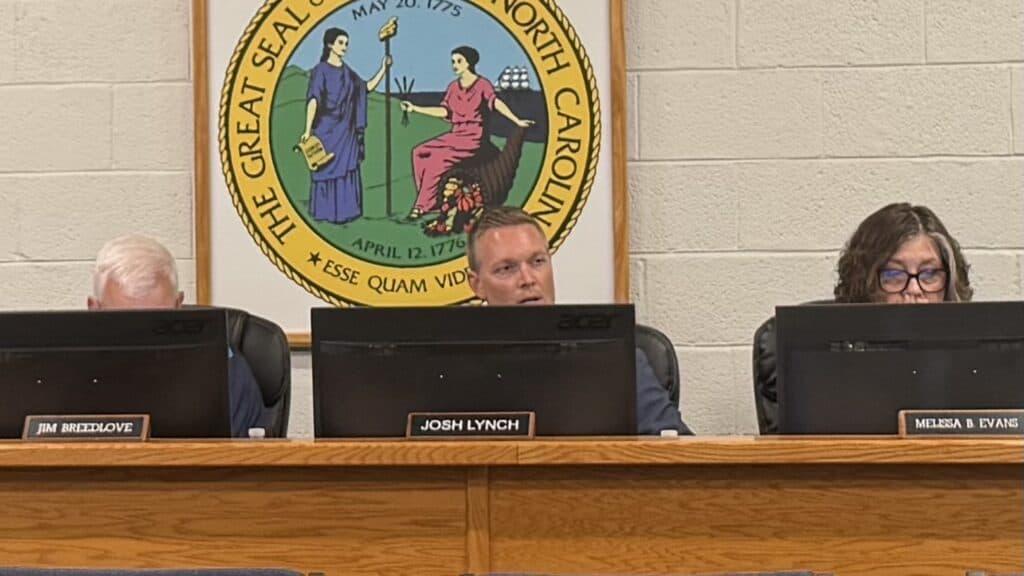
Superintendent Josh Lynch said district leaders will continue evaluating options to address the funding shortfall while monitoring state budget developments in Raleigh.

Rather than immediately reducing personnel, officials are first examining programs, supplies and other operating expenses.
“These are areas that we’re going to have to consider,” he said, adding that any reductions would have “a drastic impact” on classrooms and students.
Lynch said the district will likely need to rely more heavily on its fund balance to help next year’s budget, despite concerns about drawing down reserves.
“Our fund balance is not in a place where we really are comfortable dipping into it,” he said. If funding does not improve in future years, additional staffing reductions through attrition could become necessary.

“The people who are the losers in this situation are students,” board member Hilary Wilkes said. “The impact of a teacher, what they can take and do with so little, impacts our kids for life.”
Despite the financial challenges, board members emphasized their commitment to preserving educational opportunities for students while navigating difficult budget decisions.
“We’re gonna make this happen. We’re gonna get through it. This is our number one goal right now,” Lynch concluded.
Officials said budget discussions will continue as they refine potential reductions and monitor state budget developments in Raleigh.
One of those developments are the teacher pay raises approved by the legislature. Salary increases include an average about 8%, with teachers in their first four years potentially receiving a 17% increase.
Teacher support plan
One of the meeting’s key presentations focused on the three-year Beginning Teacher Support Plan outlined by Bryan Singleton.
“When [teachers] first come in, it’s about surviving and stabilizing, classroom management, planning, lesson planning, classroom engagement, student engagement — their priority,” Singleton said.
Under the proposal, the first year would focus on helping new teachers establish a strong foundation through classroom management, lesson planning and student engagement. During the second year, the emphasis would shift to using student data, strengthening partnerships with families and deepening professional practice. By the third year, teachers would be encouraged to develop leadership skills, participate in mentoring and prepare for future leadership roles within the school system.
The support plan also calls for monthly meetings for beginning teachers, primarily conducted online, as well as professional learning communities (PLCs), curriculum support, technology integration, classroom management training, Multi-Tiered System of Supports (MTSS), assessment, literacy, workshops.
“Most of what we’ve learned is, most learn best from their counterparts, their coworkers, and making sure that they’re getting that feedback as well,” Singleton said.
In addition to formal evaluations, the plan emphasizes ongoing instructional feedback throughout a teacher’s first three years. Singleton also discussed a new artificial intelligence tool that would allow teachers to record classroom lessons and receive automated feedback on their instruction.
“I’m anxious to really see how that’s gonna work out. That’s definitely new for us,” he said.
The plan also includes educator wellness initiatives, including regular wellness check-ins, work-life balance support, recognition of outstanding educators and efforts to identify future school leaders.
Partnership with Boys & Girls Club
Another major discussion centered on a proposed partnership between Macon County Schools and the Boys & Girls Club of the Plateau, as board members continued reviewing a draft Memorandum of Understanding (MOU) that would allow BGCP to use the Bartram Academy facility — which will be renamed the Peak Academy at Franklin High School — for after-school programs, summer programming and youth development services.
Jennifer Love, the schools STEM Coordinator and the Afterschool Edventure/Summer Edventure Coordinator said the goal is to create “free of charge, high-quality, nationally recognized curriculum-based after-school care and summer programming.”
According to Love, the BGCP would operate after-school programming and summer camp at the Peak Academy facility, though the building would remain available to Macon County Schools during the school day for teacher training, professional development, meetings and other educational purposes.
Love said BGCP is pursuing several grants to support both the facility and programming.
Among them is a $616,000 USDA infrastructure grant that would fund improvements to the facility, including painting and repairs, grading, landscaping, fencing, kitchen and bathroom repairs, playground construction and the purchase of buses for student transportation.
“This is really the grant that would enable them to provide that free childcare, that free summer programming,” Love said.
She also noted that maintenance of the greenhouse at Peak Academy should be addressed separately in a future lease because the space requires regular care.
Under the proposal, BGCP would assume responsibility for utilities, including electricity, water, sewer, trash service, internet and telecommunications, as well as liability insurance, interior maintenance and daily operations. The school system would remain responsible for exterior maintenance, structural repairs and capital systems. Board members asked whether BGCP’s responsibilities should include groundskeeping and landscaping.
If approved, the MOU would not represent a final contract or lease but rather an outline of the parties’ intent to continue discussions toward a potential lease agreement. Specific terms, including each party’s responsibilities, would be negotiated later as part of a formal lease.
Workforce development and program expansion
Love also discussed a proposed Dogwood Health Trust Collaboration Grant tied to the BGCP partnership. The grant would support a workforce development model that includes training staff in the BGCP curriculum, creating pathways connected to the school’s Career Technical Education and early childhood programs at FHS, and partnering with Southwestern Community College.
Under the proposed model, some current staff members would gradually transition from the school system payroll to BGCP employment.
Love said the program currently serves elementary-age students but could eventually expand to older students, as the Boys & Girls Club model can serve students from kindergarten through 12th grade.
BGCP is also seeking a 21st Century Community Learning Centers grant, a federal funding source that Love said would support free after-school care and summer programming. The grant would provide three years of funding and can be reapplied for. She noted that Macon County has not previously received a 21st Century grant, which could be an advantage during the application process.
Board members questioned how students would be selected if demand exceeds available space. Wilkes wanted to ensure fairness.
Love said the program would likely prioritize families already receiving childcare subsidies, with remaining spaces potentially filled through a lottery process.
The discussion also included a comparison with the current summer program, which costs approximately $1,400 per student for seven weeks and two additional days.
“That is to cover all the field trips, meals, plus a snack, staffing and materials,” Love said.
Currently, 115 students have been accepted into the district’s summer camp, while after-school programs serve between 75 and 150 students, depending on the day. Love said Peak Academy has a capacity of roughly 200 students based on restroom capacity calculations and could expand over time by adding services for additional grade levels.