


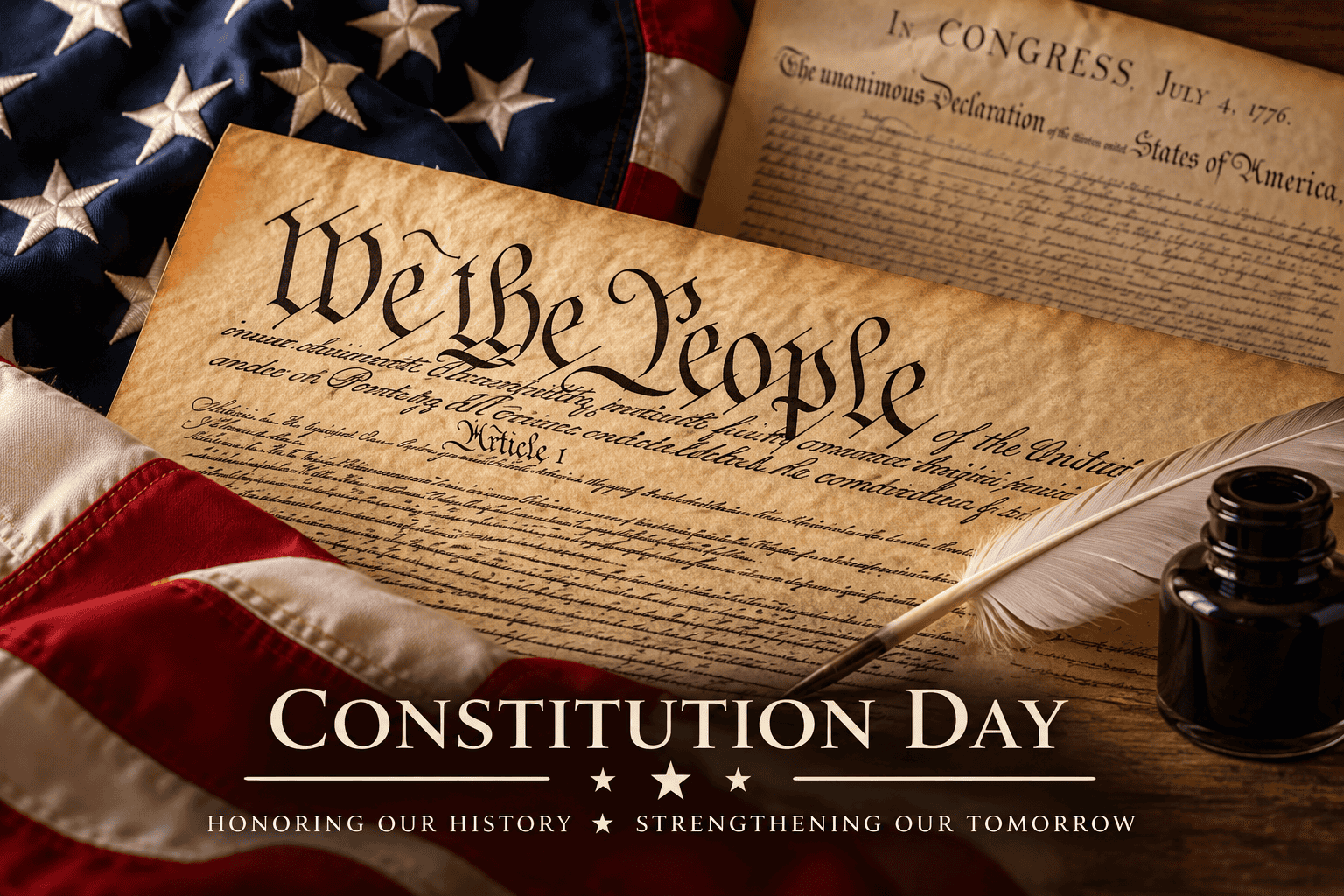

As Constitution Day approaches, it is worth taking a fresh look at what our founding document actually established and what it did not.
A common claim is that the United States was founded as a “Christian nation.” While it is certainly true that many Americans in the founding era were Christians and that many of the Constitution’s signers came from Christian backgrounds, the Constitution itself tells a different story about the nature of our government.
The Constitution establishes no national religion. It does not mention Jesus Christ, Christianity, or the Bible. Instead, Article VI expressly prohibits religious tests for federal office, ensuring that public service would not depend on adherence to any faith tradition.
The framers themselves held a wide variety of religious beliefs. Some were orthodox Christians, others were influenced by Enlightenment thought, and some embraced forms of religious rationalism often associated with Deism. Despite these differences, they agreed that the new federal government should not be tied to a particular church or denomination.

That commitment was later reinforced by the First Amendment’s protection of religious liberty. The genius of the American experiment was not the establishment of a Christian government, but the creation of a constitutional system in which people of all faiths, and of no faith, could enjoy equal rights under the law.
On Constitution Day, we should celebrate the document for what it truly accomplished: a government founded on liberty, citizenship, and constitutional principles rather than religious affiliation. That vision has allowed generations of Americans with diverse beliefs to live, worship, and participate freely in our democracy.
Jennifer Germain, US Army Veteran, Franklin, NC