


One year ago, the Board and members of Mountain Synagogue dreamed a dream. With a vision of bringing an important story of Holocaust remembrance to the community, that dream became a reality through a grant from the Jewish Federation of North Carolina and in cooperation with the Macon County Interfaith Coalition.
Just days before Yom Kippur, the community was invited to The Smoky Mountain Performing Arts Center for a moving presentation centered on the Paper Clips Project. The program included a live Zoom connection with students at both Franklin High School and Whitwell Middle School, bringing together the younger generation and community members to remember the six million Jews murdered during the Holocaust.
The program featured the 83-minute documentary “Paper Clips”, released 28 years ago.
The film tells the remarkable story of students and teachers at Whitwell Middle School in Tennessee who set out to collect six million paper clips—one for each Jewish victim of the Holocaust. What began as a classroom project grew into an internationally recognized lesson in remembrance, tolerance and the consequences of hatred.

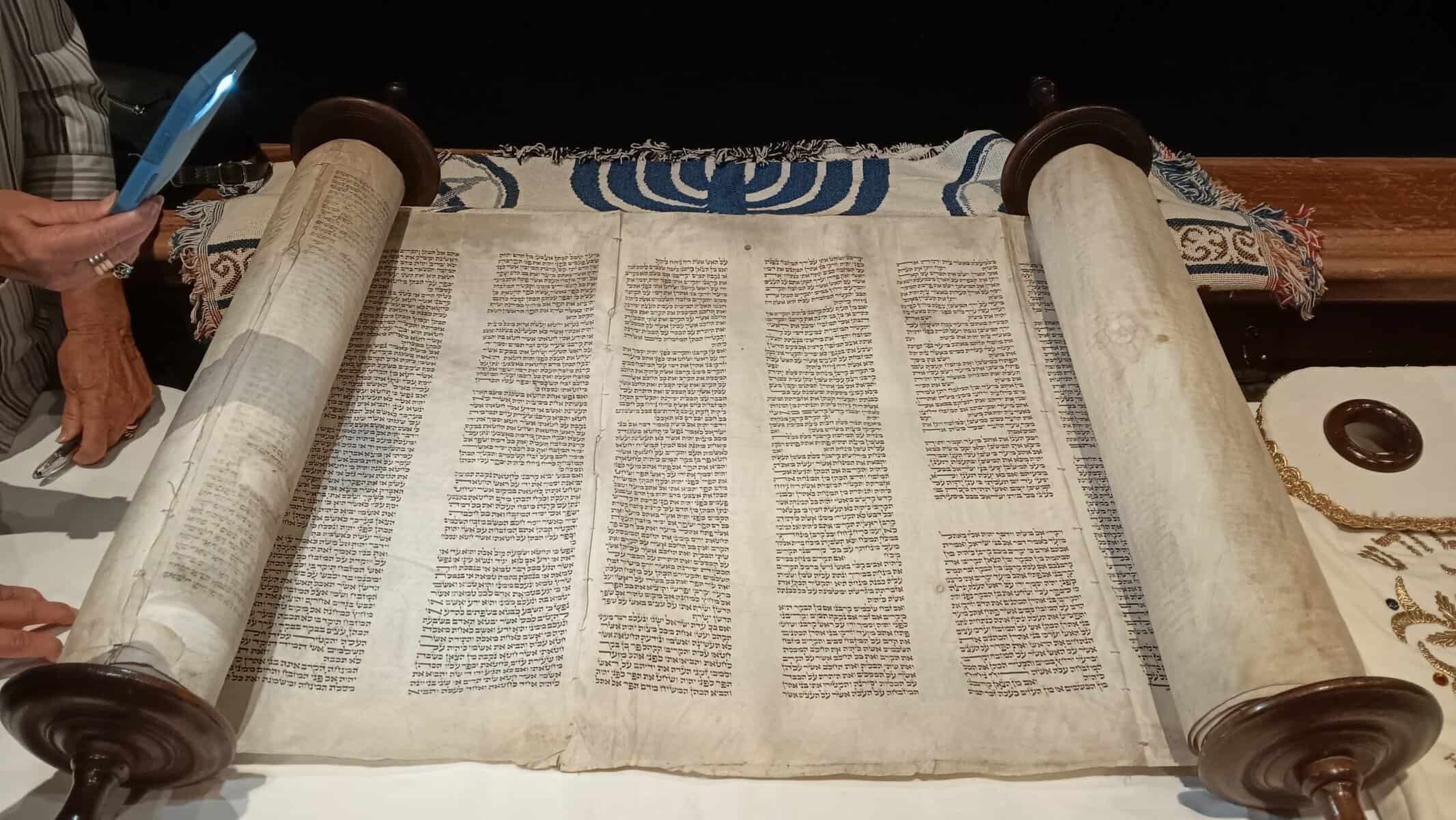
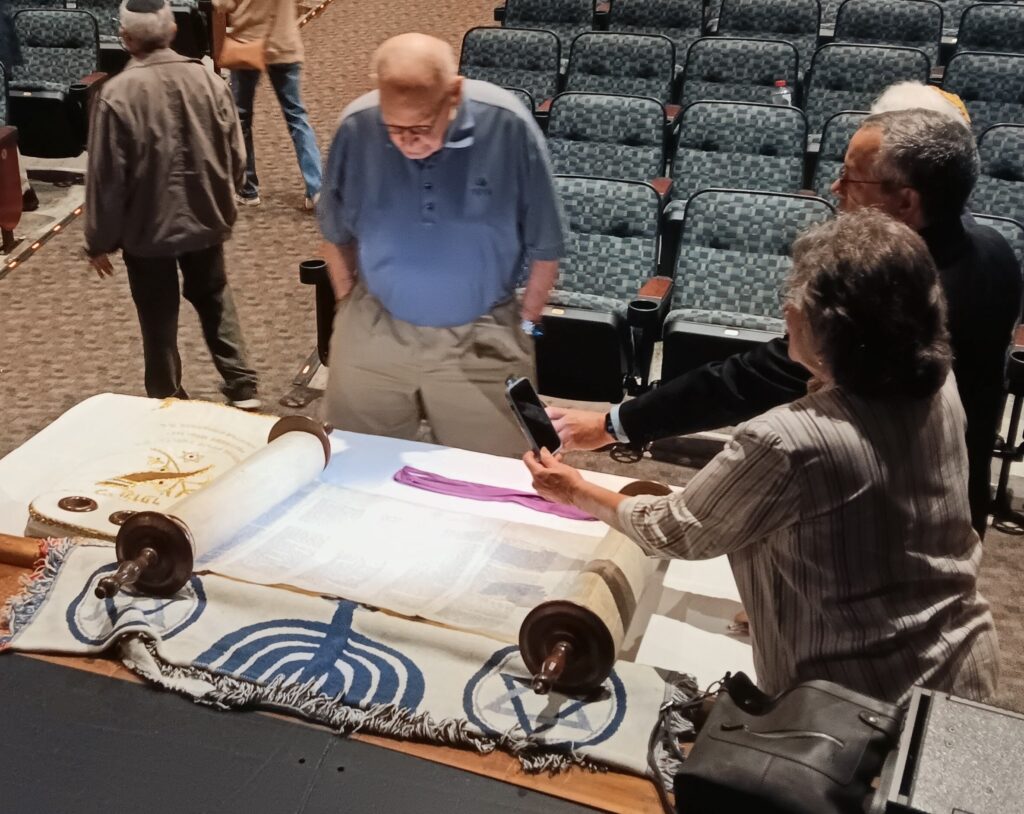
At the conclusion of the documentary came a particularly moving opportunity: those attending were able to view a 228-year-old Torah Scroll. Made from deerskin and originating in Bernau, Czechoslovakia, this Torah is a remarkable survivor of history.
Adding to the significance of the ancient scroll was a visible “tattoo” on its wooden handle. The marking offered a tangible reminder of the treatment of Jews and their sacred objects during the Holocaust.
The Nazis confiscated Torah scrolls and other religious treasures from Jewish communities and systematically catalogued them. Jewish prisoners were forced to identify and mark the sacred objects, creating records of the religious property the Nazis had seized.
Seeing the tattoo on the wooden handle of the Torah brought that history into sharp focus. It was not simply a story being told in a documentary or a statistic representing six million lives. Those attending were looking at an actual sacred object that had survived generations, persecution and the destruction of Jewish communities.
Coming just days before Yom Kippur, the presentation carried an especially profound message. The Paper Clips Project taught the importance of remembering the millions who were lost, while the ancient Torah offered a physical reminder of a Jewish community and tradition that endured.
And it all began with one simple question: How can we begin to understand the six million lives lost during the Holocaust?
With a single paperclip.
Editor’s Note: The 2004 documentary “Paper Clips” is available on Amazon Prime or through Google play movies.