


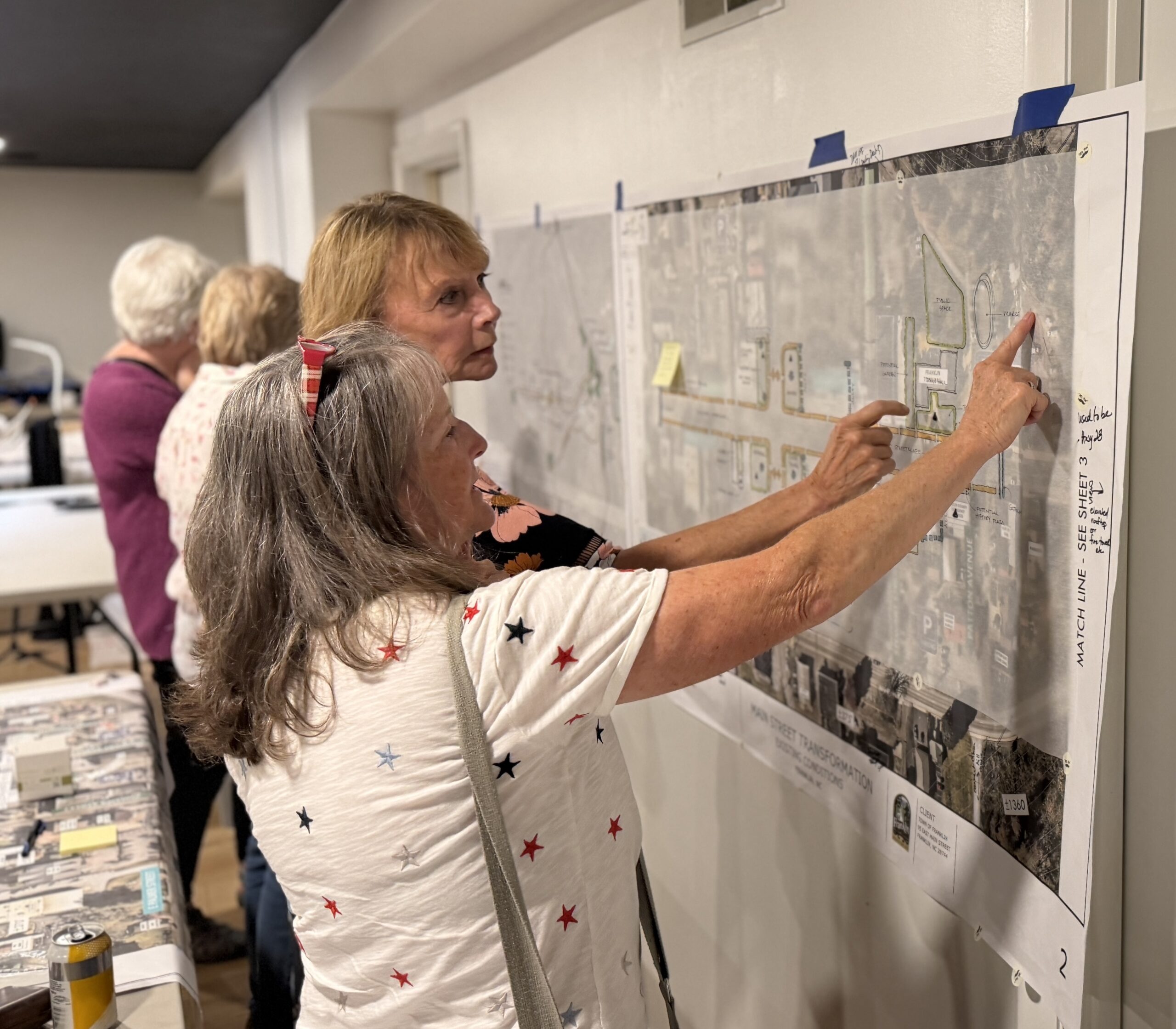

A two-day public planning session focused on reimagining Main Street drew a record number of residents, who gathered to discuss the future of the city’s central street, test design concepts and vote on development priorities.
“I’ve been really surprised at the level of participation,” Mayor Stacy Guffey said. “My expectation in terms of participation has been exceeded by far.”
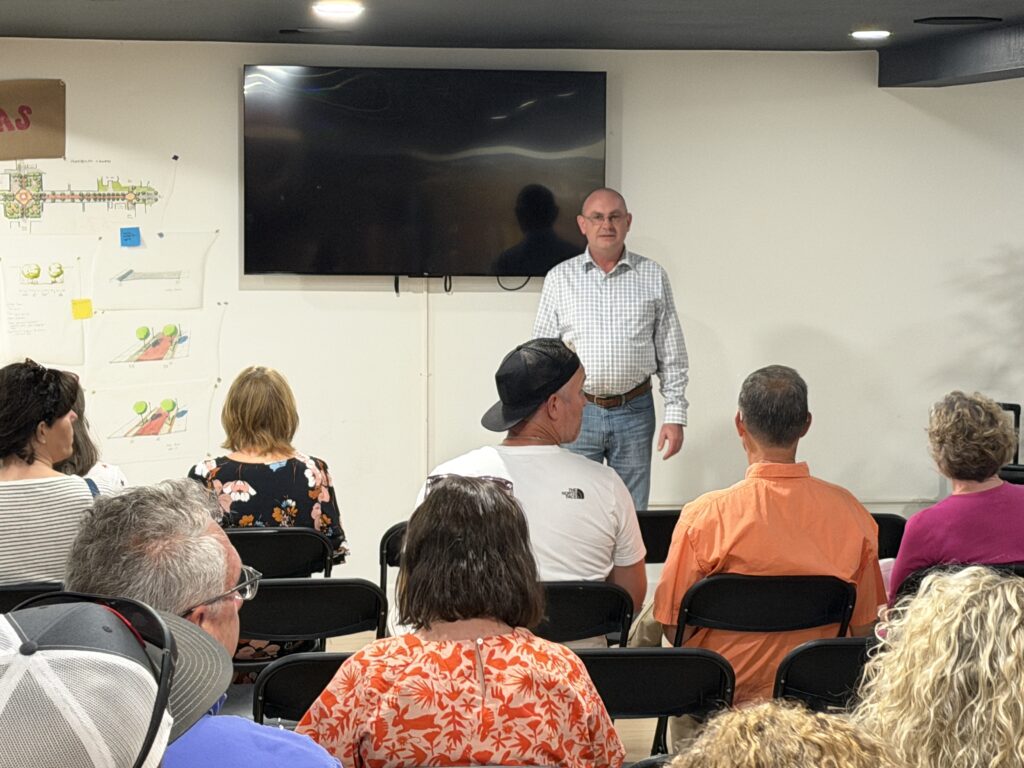
Organizers emphasized that the Main Street Transformation Meeting was not a presentation of a final street design. Instead, the event was intended to test ideas, collect public feedback and help guide future decisions. The project is a community planning and design effort rather than a finalized construction plan.
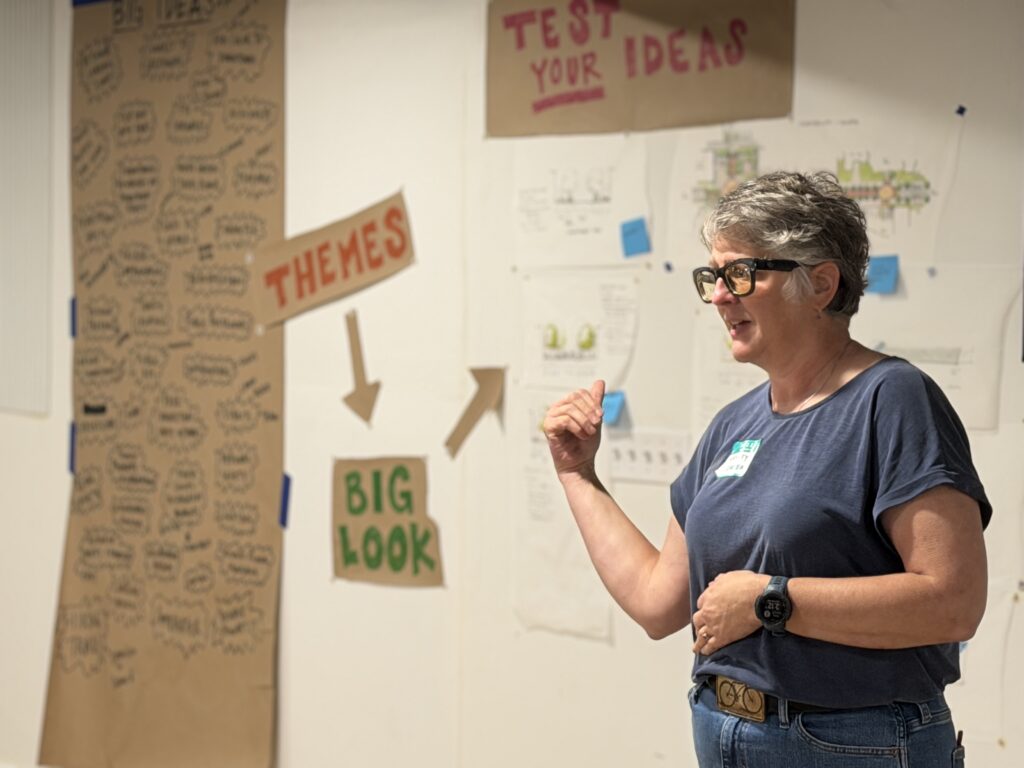
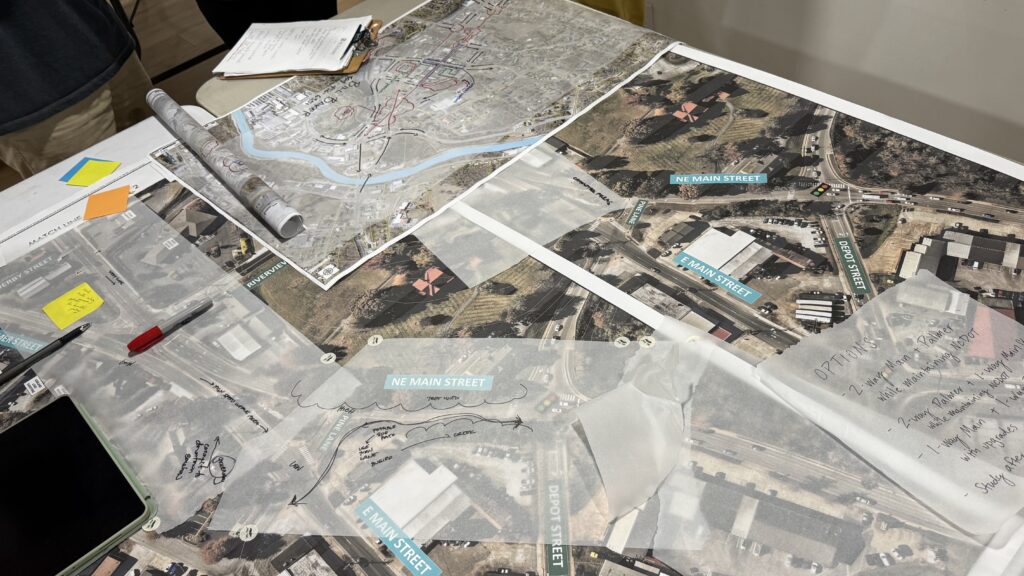
Throughout the two-day event, participants took part in several interactive exercises. Residents used visual floor markers to determine preferred sidewalk widths, voted with stickers on various trade-offs for the future of the street, reviewed conceptual renderings and discussed potential scenarios for downtown development.

A team of designers and planners from McAdams and contractor Toole Design gathered public input and, by the second day, presented preliminary concepts based on ideas shared by attendees.
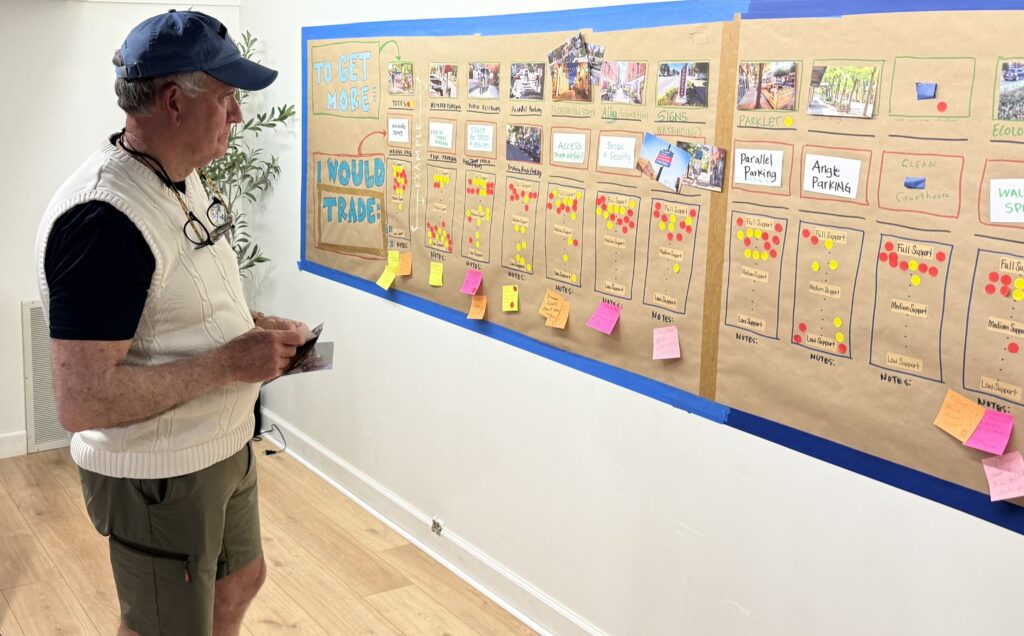
Community priorities emerge
Among the most common requests were additional public gathering spaces, expanded outdoor dining areas, more trees and pollinator-friendly landscaping, improved downtown wayfinding, activation of underused alleys and preservation of Franklin’s historic character.
Participants also stressed the importance of creating a comfortable pedestrian environment while ensuring that downtown remains recognizable and retains its unique identity.
Organizers noted an unusually high level of agreement among participants. “There’s only one point that feels really controversial, and that’s kind of amazing,” Carter said, noting that such consensus is rare in large-scale public planning efforts.

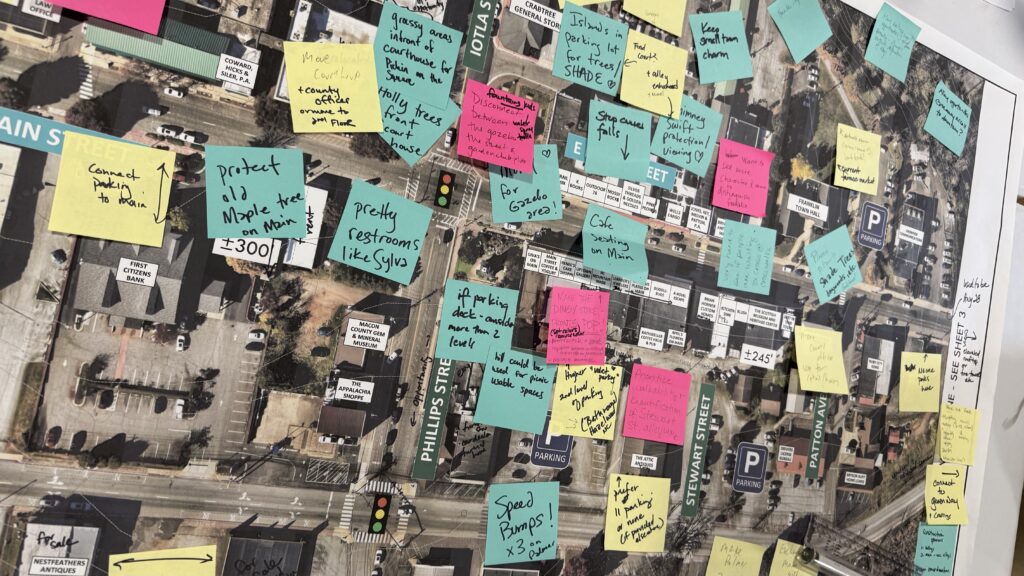
One of the most unexpectedly popular topics involved the alleys branching off Main Street. Designers viewed the alleys as potential public gathering spaces, additional downtown “hidden gems” and an important part of a future pedestrian network.
The transformation concept extends well beyond a single street. It envisions stronger connections between downtown, greenway and historic routes throughout the town.
“You have some very unique spaces in your town — the historic district, the Women’s History Trail and other historical assets,” Sara Donohoe said. “Even though this project’s study area focuses on downtown, those historical elements extend throughout the community, and they’re what make your town unique.”
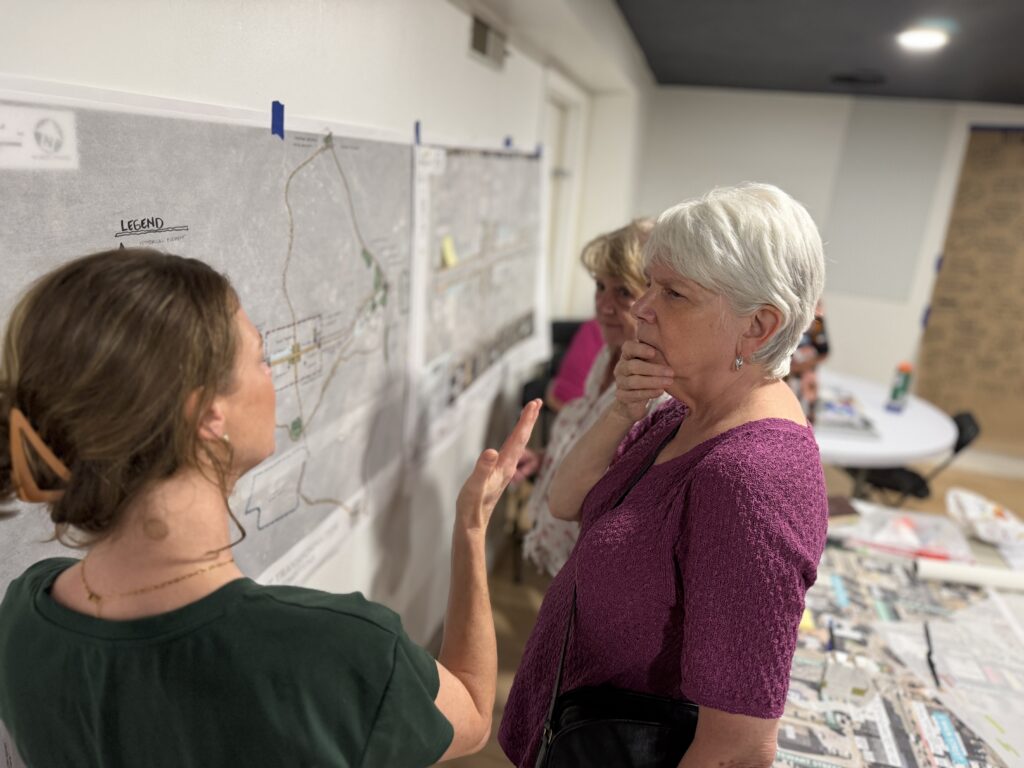
Balancing Limited Space
One of the project’s primary challenges is Main Street’s limited width, estimated at approximately 60 to 65 feet. As a result, every potential improvement requires balancing the needs of drivers, pedestrians, businesses and landscaping. The concepts presented included various approaches to traffic flow, parking, sidewalks, and public gathering spaces.
Proposed features included additional trees, integrated green infrastructure within sidewalks, pocket tree spaces and the possible conversion of some parking spaces into parklets or seating areas.
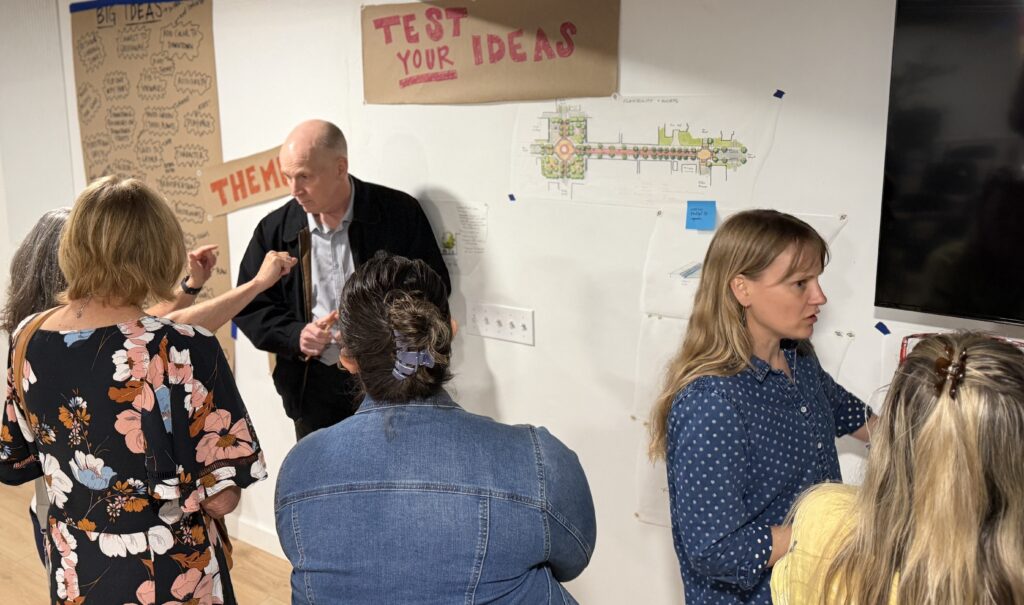
Among the most interesting ideas was a flexible-use model for Main Street. Ian Lockwood presented a concept in which the same section of street could serve different functions throughout the day.
The same space can be “a loading zone at 10 o’clock in the morning,” he said. “And after 10 o’clock, they turn into permited spaces. And then at 5 o’clock, they turn into dining areas.”
According to the design team, such an approach would allow public space to adapt to business needs, seasonal events and changing community activities.
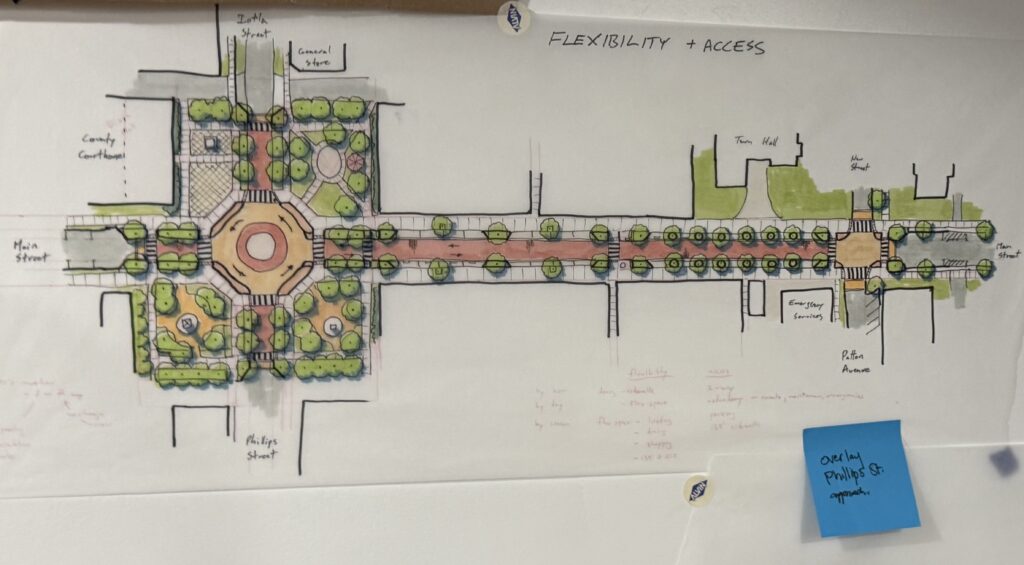
The project also envisions accommodating concerts, festivals and other community events.
Designers devoted significant attention to accessibility, including curbless street concepts that could improve mobility for parents with strollers, people with disabilities and older residents.
The presentation also explored engineering considerations, including permeable pavement, stormwater management, drainage through landscaped areas and the integration of natural systems into the urban environment.
Designers additionally considered an approximately 18-inch grade change along portions of the street, discussing both ways to incorporate the elevation difference into the design and options for leveling it.
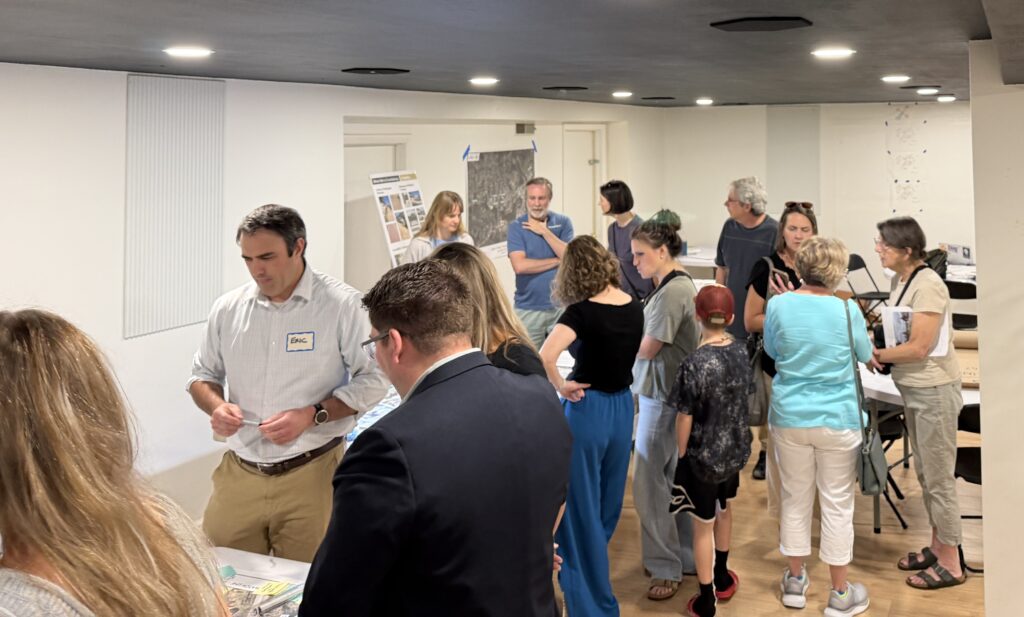
Community engagement exceeds expectations
Mayor Guffey said public involvement surpassed expectations. “We had people bring in their own plans. Concepts that they’ve generated with AI or other tools like that.”
However, many potential changes will depend on cooperation beyond the local government. The North Carolina Department of Transportation (NCDOT) owns the street and a lot of the infrastructure. So, they necessarily have to be a partner.
“One thing that I’m committed to is to take in these ideas, take them to DOT, negotiate with DOT and see what kind of changes we can make, but not to ignore any of them,” he said.
The planning process already has a defined schedule for future phases.
A NCDOT meeting is scheduled for June, followed by continued refinement of design concepts. Additional engagement, data collection and analysis, steering committee meetings and consultations with transportation officials are planned between July and September.
In October 2026, the project team is expected to submit its plans to the state in preparation for a future Main Street repaving project. A repaving contract is anticipated to be awarded in January 2027.
“The reality is, I think next year with a repaving, there are some short-term things that we can get done in that process,” Guffey said.
A Long-Term Vision
Organizers emphasized that the effort is ultimately about a long-term vision for downtown Franklin. The project is broadly divided into three phases: short-term improvements targeted for fall 2027, medium-term goals by 2030 and long-term objectives extending to 2040.
Carter said the project timeline is ambitious by planning standards. “That might seem long to you, but for the type of work we do that’s actually really fast,” she said.
Reflecting on the significance of the process, Mayor Guffey said: “At the end of the process, you get to see your idea.”