


Guest Editorial
If you are keyed in on local social media platforms, you know it is an incredibly tense time for library supporters in Macon County. It is entirely understandable why so many are sounding the alarm.
When residents hear that their county is taking the first step to leave a regional library system, it sparks a gut-reaction fear that library doors will close permanently or that beloved staff will be let go.
However, looking closely at how this “quagmire” unfolded at Tuesday night’s County Commissioner’s meeting, the decision is less about closing the library and more about fiscal self-defense following Jackson County’s exit. Stripped of social media panic, the reality reveals a strategy to protect both our libraries and our taxpayers.

The Dominos of the Regional Breakup
To understand Macon County’s position, we must look at the cold math of the Fontana Regional Library (FRL) system.
- The Catalyst: Jackson County previously voted to withdraw from the FRL system, an exit taking effect this summer.
- The Financial Shift: Centralized administrative costs, regional headquarters, and shared IT infrastructure were historically split among Jackson, Macon, and Swain counties.
- The Unfair Burden: Swain County has historically contributed a much smaller piece of the financial pie. With Jackson County completely out of the picture, the brunt of keeping the regional administration alive was set to fall almost entirely on Macon County.
Macon County is effectively being asked to single-handedly subsidize a multi-county administration, even though our taxpayers only represent a fraction of the actual library branches utilizing it.
“Surplus Funds”
Despite fears circulating online, there is significant good news hidden in the county meeting notes regarding this year’s funding.
The library’s immediate funding needs are entirely covered. FRL requested roughly $1.6 million from Macon County for the upcoming budget. While there was an initial gap between that request and what was originally allocated, the county manager and the board pointed out that FRL is returning surplus funds back to the counties.

By law, these refunded monies must be spent directly on the libraries. The county is utilizing these surplus dollars to bridge the budget gap. There is no immediate cut to our system; your libraries are fully funded for this upcoming fiscal cycle.
Why the July 1 notice, and the contract
At Tuesday’s meeting, the board faced a contractual bind: commit blindly to funding the regional system for the next two years, or give formal notice to exit by the July 1 deadline. By voting to issue the notice, the commissioners didn’t vote to shut down our libraries; they voted to buy time.
Because the tri-county agreement requires a full year’s notice, absolutely nothing changes for the next 12 months. The libraries stay open, books stay on the shelves, and our local staff keeps their jobs, continuing to be paid through the FRL framework.
During this year-long transition window, Macon County has the opportunity to plan a stable, orderly pivot. Instead of paying into a bloated regional administrative framework, leadership can explore transitioning our branches into a standalone county-department infrastructure.
This year provides the necessary runway to figure out how to seamlessly transition IT networks, absorb local library staff as formal County employees with secure benefits, and ensure every single dollar of Macon County tax money stays entirely inside Macon County libraries.
The changing gravity of the library board
The sharp contrast between the historically quiet nature of library board appointments and the packed commission meeting room highlights how deeply people care about the direction of our library.
The primary issue driving this sudden uptick in interest surrounds library materials—specifically graphic novels containing explicit adult content and books dealing with complex social topics.
This friction point brings up a delicate balance between respecting community standards, preserving parental rights, and navigating the ethics of public access.
The reality behind the controversy: relocation vs. restriction
A key nuance that gets completely buried in polarized online shouting matches is the fundamental difference between banning a book and simply moving it.
When community members ask for certain explicit graphic novels or highly mature themes to be moved out of the children’s or young adult sections, online spaces frequently mischaracterize it as a demand for a “total book ban.”
In reality, the argument being made by many local parents is not about erasing these books from existence, but rather about intentional shelving geography:
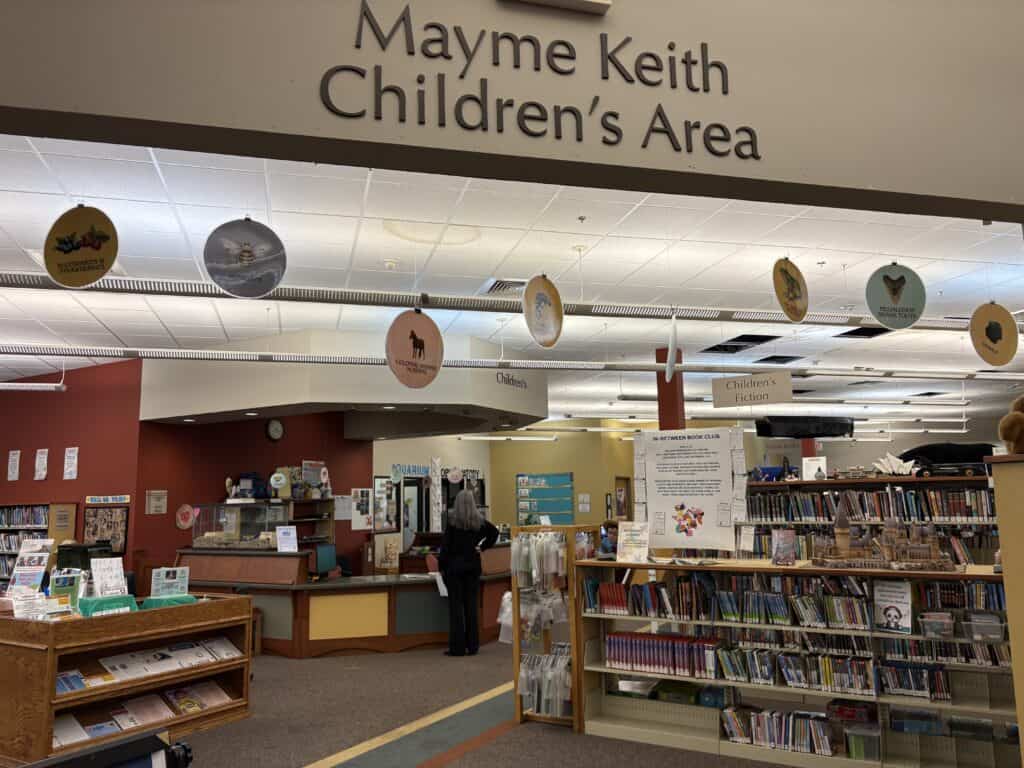
- The “Browsing” Factor: Children do not navigate public libraries using online card catalogs or complex subject queries; they browse horizontally, pulling colorful spines off low shelves.
- The Parental Buffer: Relocating mature content containing explicit drawings or full-frontal nudity to an older section or a higher shelf does not remove an adult or older teen’s right to read it. Instead, it creates a physical buffer, ensuring that a parent is the one guiding their child toward those complex topics, rather than a young child stumbling into explicit illustrations by accident.
When labels like “homophobic” or “censorship” are thrown around loosely online, it shuts down what could otherwise be a highly practical, localized conversation about age-appropriateness and library layout design.
The board’s logistical importance
Now, given the simultaneous clock ticking on the FRL exit, the County Commissioners’ decision to hit the brakes on routine, immediate board reappointments makes solid strategic sense.
Because library board members serve rolling three-year terms, whoever sits in those seats right now will be the exact individuals tasked with steering our libraries through a massive structural evolution if the county goes independent.
If Macon County transitions to a standalone system, the role of this board will fundamentally change from advisory to administrative, taking on far more weight to shape local policies, direct county-specific budgets, and interface directly with county management.
Because the current board only needs six members to function legally and maintain a quorum, there was no immediate emergency requiring the commissioners to rush into long-term commitments.
The county now has the runway to ensure future appointments are geographically balanced to represent our entire county footprint—from Highlands to Franklin to Nantahala.
Moving Beyond the Noise
It is easy to get caught up in the digital crossfire. Watching the rapid-fire accusations on local social media can be entertaining—even addictive. But while keyboard warriors trade insults, the actual future of our community infrastructure, our tax dollars, and our children’s environment is being decided in meeting rooms on Tuesday nights.
We cannot afford to let online drama dictate local reality. The commissioners aren’t killing the library; they are refusing to let Macon County taxpayers get stuck with the check for a crumbling regional partnership, using the next year to bring our local libraries safely under home rule. It is time for every resident of Macon County to step away from the screen, key into the hard facts, and commit to active, rational vigilance.
Let’s save our library by focusing on the truth.