



In Macon County, we have the Bartram Trail, Bartram School, the headquarters of the Blue Ridge Bartram Trail Conservancy, and an occasional Bartram specialty-brew beer at Lazy Hiker Brewery. But who was Bartram, anyway?
And what’s he got to do with America’s 250th?
The trail and 1776
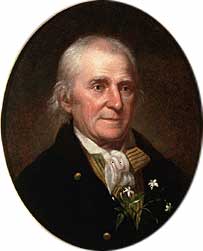
When horticulturist William Bartram set out in 1776 on his famous expedition into the “Upcountry” or “Cherokee Territory”, but what is now Western North Carolina, the war for American independence was in its beginning stages.
While Bartram was making detailed preparations to walk, canoe, or ride a horse from Charleston, S.C. into the wild frontier and Cherokee lands we now call home, the Declaration of Independence was being hashed out by our famous founders in Philadelphia.

In fact, Bartram, the son of famed botanist John Bartram, lived across the Schuylkill River from the State House now called Independence Hall where the founders ultimately held their meetings. William was not just familiar with the founding fathers; he considered some of them acquaintances and friends.
In the book, James Madison, by Lynne Cheney, the fourth president proposes to a group of delegates a visit to the home of “famed naturalist William Bartram … in the countryside.”
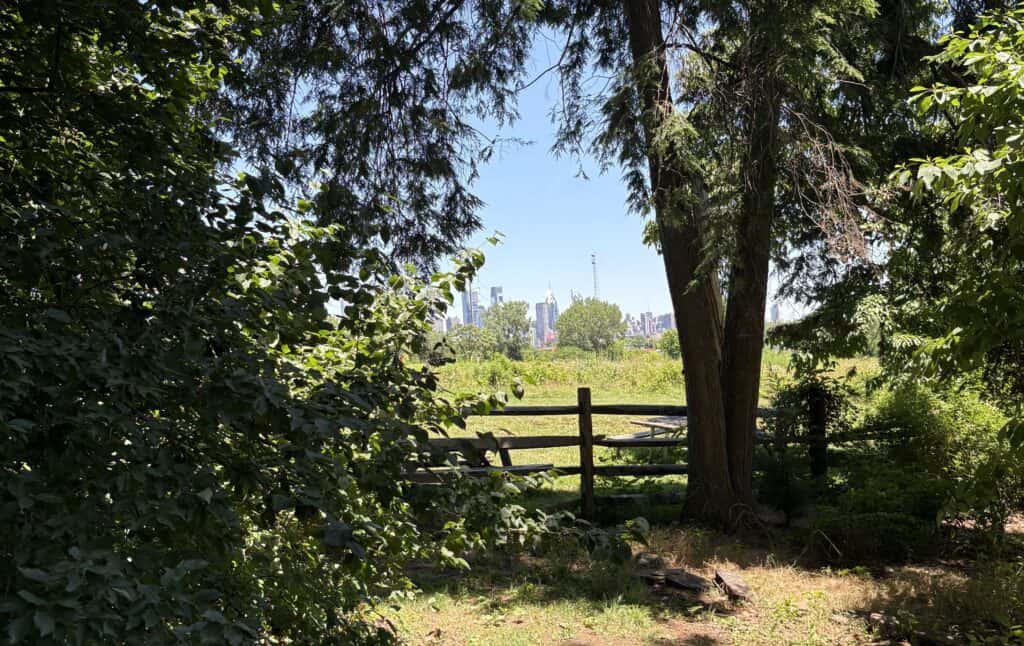
That “countryside” is today just two miles from downtown Philadelphia and borders what became in the 20th century an impoverished area.
According to the book, “Madison and the delegates startled Bartram, who was hoeing barefoot when they arrived, but he soon made them welcome, and they wandered the alleys of his very old gardens for nearly two hours.”

Plants over patriotism
Even though Bartram could have been, by proximity, timeframe, and relationships, wrapped up in the early days of America’s fight for freedom, he elected to traverse the Appalachian wilderness and document the plant life and people he encountered instead of engaging in political discord.
In fact, by the time Bartram left “from Charleston for the Cherokee nation,” according to Part III, Chapter I of his classic book Bartram’s Travels, a year’s worth of Revolutionary War conflict was already underway.
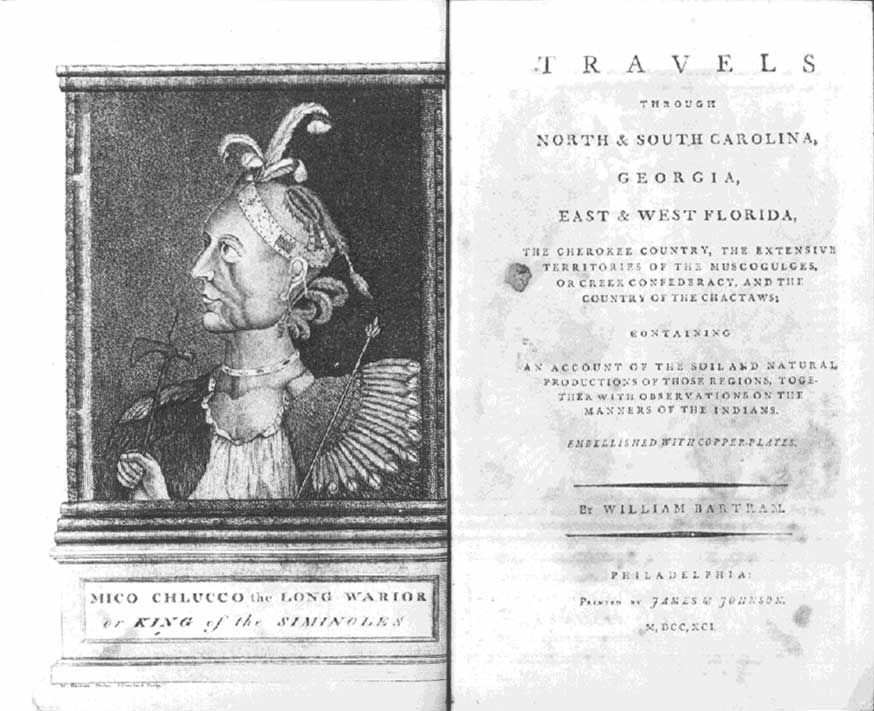
The first shots of the Revolutionary War were fired at Lexington and Concord in Massachusetts April 19, 1775. The first major battle, at Bunker Hill, occurred June 17, 1775. Bartram departed for WNC on April 22, 1776,
He barely missed the British attempt to seize Charleston on June 28, 1776. In the meantime, the Second Continental Congress began meeting at the State House in Philadelphia, with much debate and scrutiny occurring in June and into the first part of July 1776 over a document that became our country’s most important.
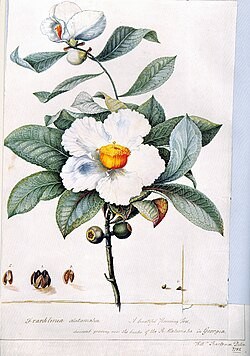
Meantime, William was observing and beautifully drawing Franklinia alatamaha, the Franklin Tree (left), named for his father’s friend, Benjamin Franklin. He also illustrated other local favorites like the Rhododendron calendulaceum, Flame Azalea, and Asimina triloba or Pawpaw – the latter of which provided edible fruit to the Cherokee.
Although the Franklin Tree no longer grows wild in Western North Carolina, they are cultivated at Bartram’s Gardens in Philadelphia. There a massive one grows in the front yard of William’s historic, preserved family home that is open to the public.
While men were dying and George Washington was commanding an army of patriots to fight against the British, Bartram was exploring Cowee and Watauga “middle towns” along the Little Tennessee River. It was there that he met the “chief of Whatoga [sic].”
He wrote about him as “a man universally beloved and particular esteemed by the whites for his pacific and equitable disposition, and revered by all for his exemplary virtues, just, modest, magnanimous, and intrepid.”
In what is now Macon County, Bartram conversed with traders, settlers, and Cherokee alike.
While people all up and down the 13 colonies were reading those famous words: “We hold these truths to be self-evident, that all men are created equal, that they are endowed by their Creator with certain unalienable Rights, that among these are Life, Liberty and the pursuit of Happiness.” Bartram was in the Nantahala National Forest, then referred to as Jore.
There he observed fields of wild strawberries so plentiful they stained horses’ hooves red. In his 1791 book, based on his daily journal entries, he wrote that he accepted a basket of strawberries from one of the Cherokee women and enjoyed the “delicious fruit.”
While Bartram spent months in Western North Carolina, he also explored Georgia, South Carolina, and Florida. He did not arrive back at “my father’s house on the banks of the river Schuylkill” until January 1778. By then, not only had the Declaration been signed by 56 men, but Gen. Washington was encamped that winter with his Continental Army at Valley Forge, just 24 miles northeast from Bartram’s home.
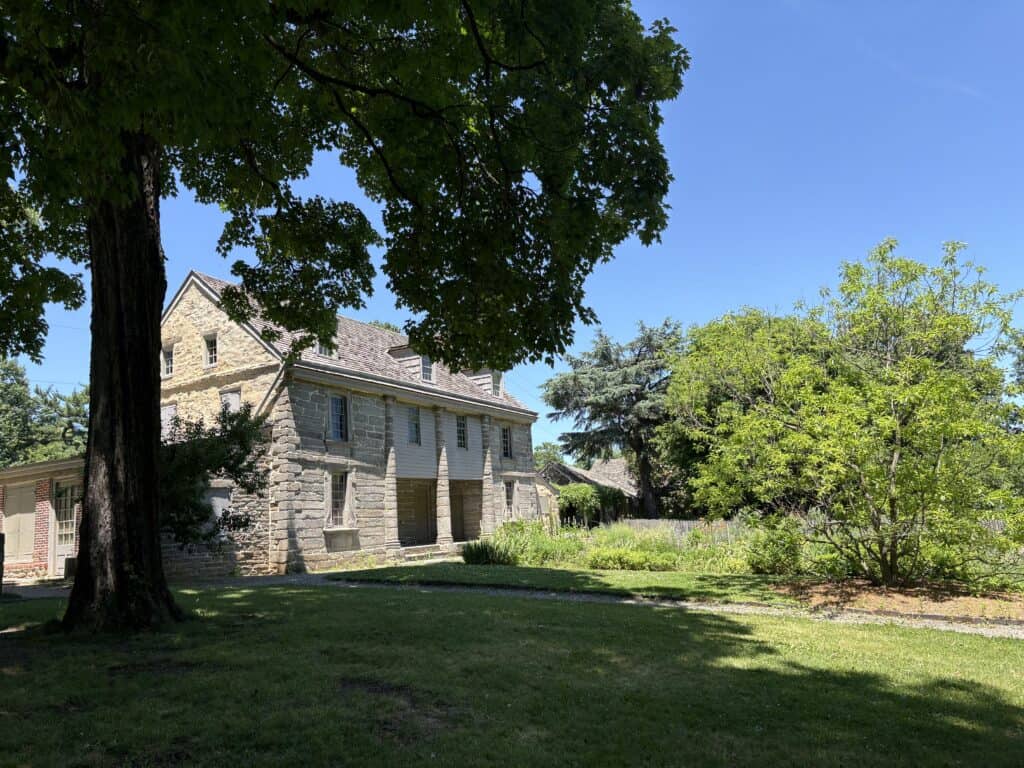
Spring through early fall of 1777, the Second Continental Congress had been meeting under the direction of their president, John Hancock of Massachusetts, to discuss and debate the Articles of Confederation, essentially America’s first Constitution. By the time Bartram arrived back at his home that year, the British had invaded Philadelphia, so the Second Continental Congress fled and began meeting 100 miles to the west, in York, Pa. Luckily, living in the “country” spared him from any British trouble.
Throughout Bartram’s Travels, he never mentions the Revolutionary War, political tensions, patriotism, or anything along those lines. Speculation in the last two-and-a-half centuries point to his fixated focus on nature over man-made conflicts.
Lasting legacy
Although he died in 1823 at age 84, William Bartram lives on not in name only.
As one of America’s first naturalists, he left us with a detailed, God-honoring observation of Macon County and the surrounding Western North Carolina mountains – before highways and commercialization.
“The world, as a glorious apartment of the boundless palace of the sovereign Creator, is furnished with an infinite variety of animated scenes, inexpressibly beautiful and pleasing, equally free to the inspection and enjoyment of all his creatures,” he wrote.
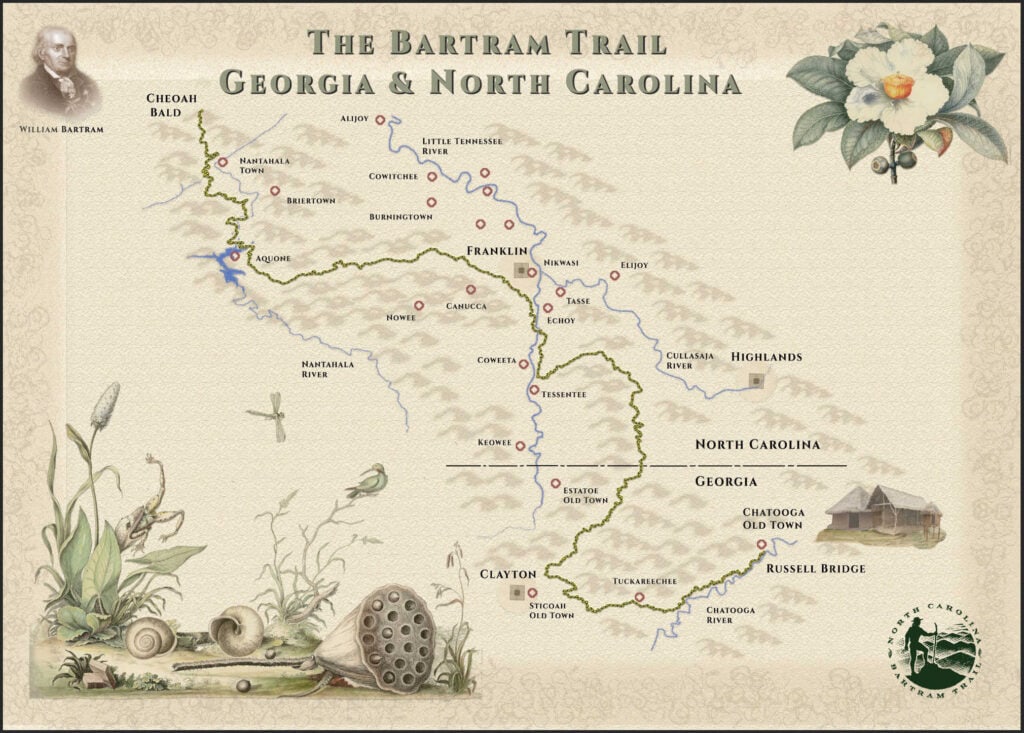
Appropriately, today, more than 100 miles of trails that run through Macon County, Georgia and Florida, bear his name and are enjoyed by countless individuals.
If you’d like to learn more about our local trail system named after this intrepid explorer, visit Blue Ridge Bartram Trail Conservancy. Anyone can sign up for educational, guided nature hikes on one of the trail’s many sections.